
Commercial Roof Recover in Elizabeth, NJ
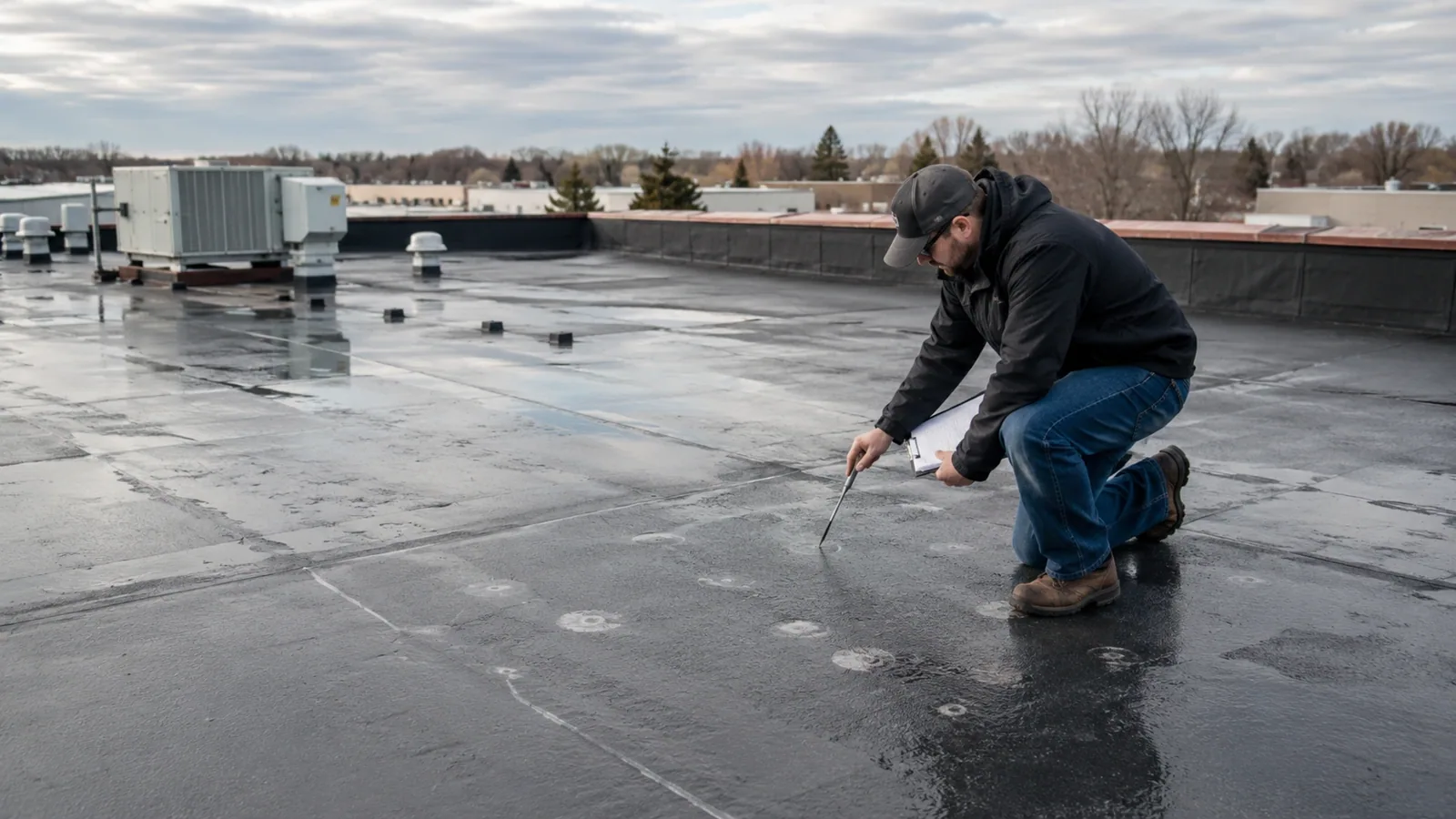
A recover keeps an existing roof in place and adds a new assembly above it. The decision turns on what remains underneath. For a warehouse near the North Avenue corridor, a sound dry base may support a recover, but wet insulation, poor attachment, or damaged deck can make another layer the wrong answer. We inspect the roof field, edges, drains, penetrations, and past repairs before recommending either direction. Selective test cuts help confirm what a surface walk cannot show. The scope then states what is retained, what is removed, and how the new work ties to walls, curbs, and perimeter metal.
Elizabeth’s commercial properties include active logistics, retail, hotel, and office uses. Each brings different access and sequencing limits. A recover can reduce tear-off and disruption, but only when the existing assembly can serve as a reliable base. We document the conditions that support the choice, explain any exclusions, and show what would change the recommendation if concealed damage appears. Compare that scope with a full roof replacement when the base cannot be retained.
Check the Existing Assembly
Before a recover, we identify the roof system, layer count, attachment, visible damage, and moisture pattern. A hands-on inspection follows seams, laps, wall transitions, curbs, drains, and old repair areas. We look for loose membrane, saturated insulation, soft spots, corrosion, and movement that could weaken the new work. A few dry test locations do not prove the entire roof is dry, so we choose test cuts where the field conditions raise a question and record what each one shows.
Deck condition matters. If fasteners cannot engage sound material, or the deck has deteriorated, a new layer may not have the support it needs. Existing roof layers also affect total assembly height, edge details, and applicable code limits. We measure transitions at doors, drains, parapets, and equipment curbs so that a recover does not leave details buried or too low. If those elevations cannot be corrected within the proposed scope, removal may be the cleaner solution.
Elizabeth’s stormwater rules and flood-management conditions make drainage worth explicit review, particularly around low-lying areas near the Elizabeth River. That is context for checking the property’s actual slopes and discharge paths, not a substitute for roof measurements. Ponding that already stresses the current assembly will remain a concern beneath a new surface unless the drainage problem is addressed.
Keep Moisture and Weak Layers Out
Moisture trapped beneath a recover can damage insulation and deck while remaining hidden from view. We look for blistering, open seams, recurring interior leaks, and repair patches that indicate movement or water entry. Infrared scanning can help locate temperature patterns associated with moisture, but suspect areas may need core cuts for confirmation. The owner receives a marked roof plan or photo record showing where we checked and which areas need removal or further testing.
A recover may be unsuitable when wet material is widespread, the existing roof has too many layers, the membrane is unstable, or the deck cannot hold the new attachment. Isolated wet areas can sometimes be removed and rebuilt before the recover proceeds. We identify the size of those areas only after inspection and keep the repair boundary visible. Covering a failing seam or deteriorated curb does not correct the failure underneath.
Match the New System to the Base
Once the existing roof passes the condition review, we select a recover assembly for the building and its use. TPO, PVC, EPDM, modified bitumen, and coatings each have different attachment and detailing requirements. The choice depends on the substrate, drainage, roof traffic, exposure, equipment layout, and approved assembly design. We do not treat a product sample as proof that the roof can take another layer.
Attachment may use mechanical fastening, adhesive, or another approved approach for the specific assembly. The design must account for the existing roof surface and the conditions below it. Insulation and cover board can improve the assembly, but added thickness changes edge heights and connections at drains and walls. The new membrane needs a plan for those transitions before installation begins. We coordinate the roof system with edge metal and coping details so the perimeter is finished to the new height.
Stage Work Without Opening the Roof
A recover can keep the weather surface intact for more of the project, yet staging still matters. We agree on material deliveries, hoisting points, debris paths, and roof access with the property contact. Near Midtown Elizabeth or a busy retail site, the crew must avoid blocking customer entrances and coordinate any lift or temporary closure. Work is divided into zones that allow the crew to prep, attach, flash, and close details in a controlled sequence.
Preparation includes removing loose material, cutting out confirmed wet areas, repairing substrate defects, and making the surface suitable for the new assembly. We keep the roof protected during any localized opening. At drains, we verify that strainers and clamping surfaces remain accessible. At walls and curbs, we prepare terminations so the new membrane can be secured and flashed without relying on a weak old edge.
Compare the Recover with Removal
The recover proposal should make the tradeoff plain. Keeping the old assembly can reduce tear-off, disposal, and some disruption. It also leaves the retained layers in place, which affects future inspection, repair access, and total roof height. Removal opens the assembly for direct deck repair and resets the detail elevations, but it adds labor, debris handling, and more time with sections of the roof under construction.
We present the conditions that support the recover, the areas that need correction first, and what is unknown until work begins. An owner should be able to see the assumed layer count, test locations, attachment approach, insulation scope, and how concealed damage would be priced and approved. If the roof proves wetter or weaker than expected, the crew pauses at that area and documents the change before covering it.
At an Elizabethport property, inspect the roof layers, drainage, and tie-ins before considering an overlay; existing conditions determine whether future repairs remain accessible. We base the recover choice on the inspected layers, drainage, and tie-ins at that property. We compare options using the actual assembly and the way the building operates, then recommend the scope that leaves a sound, serviceable roof.
Commercial Roofing Questions
What would rule out a recover on my building?
Widespread moisture, weak deck, loose attachment, excessive existing layers, or details that cannot be raised and reflashed can rule it out. We inspect the roof and use test cuts where the condition is uncertain. If isolated wet areas can be removed and rebuilt, we show that work separately. A recover is considered only after the retained base is judged suitable for the specified assembly.
How do you verify whether insulation is wet?
We combine visual findings with moisture survey methods and selective core cuts. Infrared patterns can help prioritize test locations, but a core confirms the material at that point. We mark the locations and findings so the owner can understand the limits of the inspection and the repairs needed before the new layer goes down.
Will the new roof cover the existing edge metal?
That detail is decided by the new assembly height and the condition of the current perimeter. We check coping, fascia, terminations, and attachment, then specify whether the metal stays, is modified, or is replaced. A raised roof without a properly finished edge can leave the perimeter vulnerable to wind and water.
Can a recover be installed while tenants remain in the building?
Usually the work can be phased to keep the building in service, but equipment access, noise, deliveries, and roof openings need coordination. We identify the affected areas and schedule the sequence with the property contact. Retail access around the North Avenue corridor may also require careful delivery timing. Weather and confirmed deck repairs can change the work area.
What happens if you find hidden damage after the project starts?
We stop at the affected section, photograph the exposed condition, and explain what repair is needed before proceeding. The approved scope should define how concealed deck or insulation work is measured and authorized. That keeps a recover decision tied to the roof we actually uncover instead of burying a material change beneath the new surface.
Have the Existing Roof Evaluated
Tell us the roof type, known leaks, past repairs, and building schedule. We will inspect the assembly and show whether a recover is suitable for your Elizabeth property.