
Commercial Roof Replacement in Elizabeth, NJ
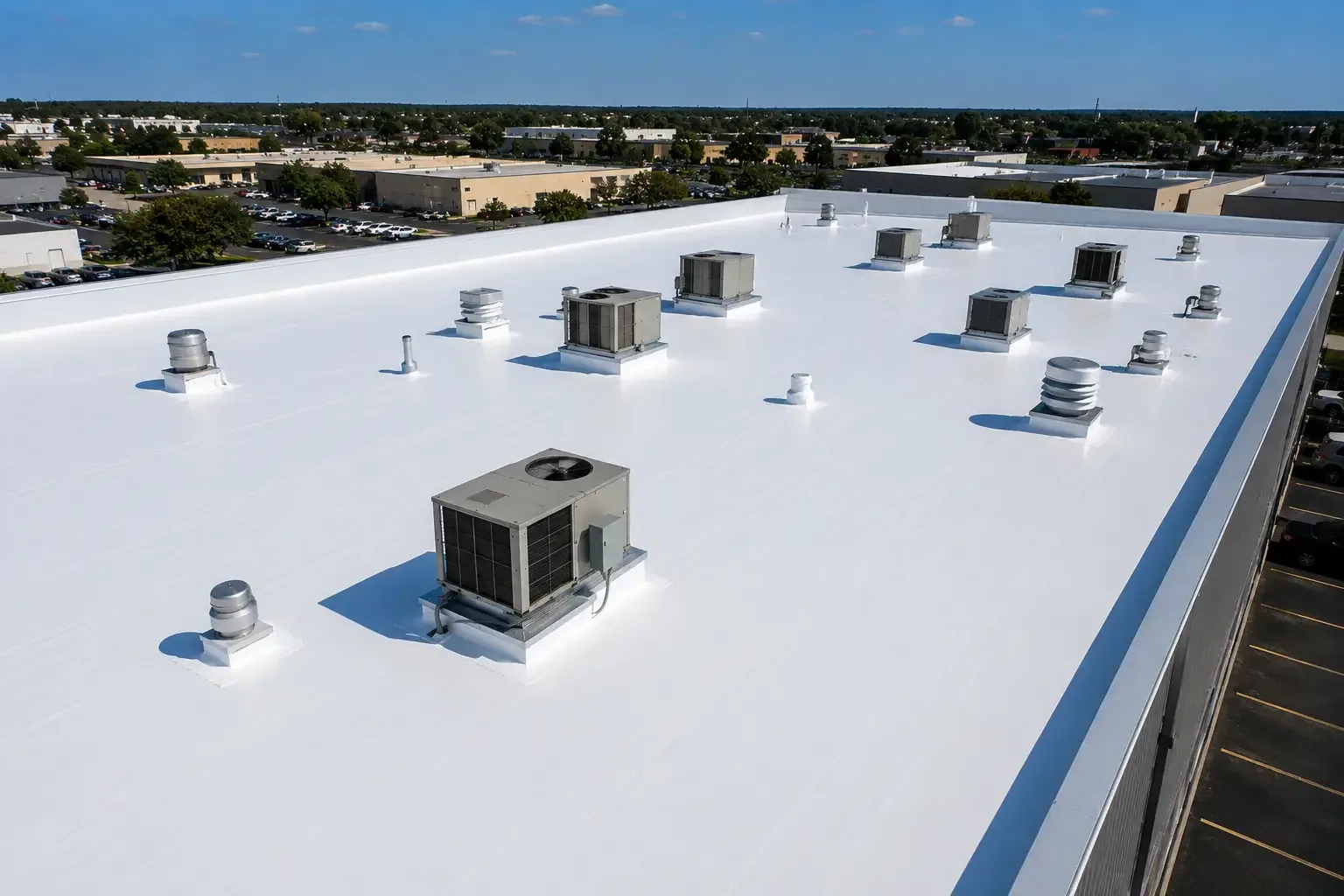
A replacement roof starts with the deck, not the color of a membrane sample. On an Elizabeth warehouse, retail property, or occupied office, the existing assembly may hide wet insulation, corroded fasteners, weak edges, or several old repairs beneath the surface. We inspect the full roof and trace drainage. For properties near the North Avenue corridor, delivery routes and active operations shape how tear-off is staged. The proposal should state what comes off, what stays, where the new roof ties in, and how the building remains protected each night.
A replacement is the right direction when the roof has reached the point where repeated patches no longer restore dependable performance, or when moisture and deck conditions rule out a recover. We compare that condition with the building’s use, equipment, drainage, and schedule. Then we lay out the sequence in plain terms, from opening the first section to closing the last edge.
Trace the Failure Before Setting the Scope
A stain under a roof can begin at a seam, curb, drain, wall transition, or damaged edge well away from the interior mark. We map those entry points before recommending tear-off. Moisture readings, selective test cuts, and a hands-on roof inspection help show whether wet material is isolated or spread through the assembly. A replacement scope built on assumptions can leave damaged insulation or deck in place, then hide it beneath new membrane.
Low-lying areas near Elizabeth River face flooding and storm-surge risks, so we inspect the drains, scuppers, and overflow route at each building. That does not tell us the condition of a particular roof. It does make the drainage review worth careful attention: we check whether water can reach drains, whether scuppers are open, and whether overflow paths remain clear. On a commercial roof, a clogged inlet or poor slope can add standing water to a membrane already weakened at a seam.
Choose an Assembly That Fits the Building
Once the substrate and drainage are understood, the replacement assembly can be matched to the building. TPO, PVC, EPDM, modified bitumen, and built-up systems each handle seams, attachment, and detailing differently. The best fit depends on roof geometry, existing conditions, exposure, traffic, rooftop equipment, and the maintenance approach the owner can support. A system name alone does not solve a poor transition or a drain set too high.
On a wide distribution roof, the scope may emphasize securement, clear travel paths around equipment, and a repeatable sequence that limits open area. A smaller retail building may call for close coordination at storefront edges and entrances. For an office that stays occupied, we identify the loud or disruptive phases, protect access, and divide the roof into workable sections. We review insulation and cover-board options where they affect energy performance, deck protection, or the required finished height at walls and curbs. A warehouse roof may require different staging than a retail building.
Sequence Tear-Off Around Daily Operations
A replacement moves through controlled work areas. We coordinate staging, deliveries, debris handling, and roof access before material arrives. In an active warehouse, loading doors and truck circulation cannot be treated as spare space. On a property with customer traffic, the crew’s work zone must stay clear of entrances and pedestrian routes. The North Avenue corridor carries substantial port-related truck traffic as well as access to retail and hotel properties, so a project there benefits from delivery planning that respects the site’s operating rhythm.
We remove only the area that can be made watertight before the shift ends. Each exposed section is checked, and damaged deck or insulation is recorded before it is covered. The replacement proceeds from the substrate outward: repair the deck, install insulation and cover board as specified, secure the membrane, then complete seams, penetrations, walls, drains, and perimeter metal. The crew does not leave an open roof overnight. Weather can change, so the daily limit is set by conditions and the ability to protect the building.
Finish the Edges, Drains, and Penetrations
Water tests the transitions first. At a wall, the membrane must rise to the required height and terminate securely. At a curb, the flashing has to meet the equipment base without leaving a pocket that traps water. At a drain, the clamping area, bowl, strainer, and surrounding slope all matter. We check how the new assembly meets existing masonry, metal, and roof sections, then make those tie-ins part of the written scope rather than treating them as minor extras.
Edge metal and coping repairs protect the perimeter while helping keep the roof system in place. Their profile, fastening, and connection to the wall need to suit the conditions on that building. We also look for gaps around skylights and pipe penetrations, movement joints that cross the roof, and old patches that could interfere with a clean bond. A replacement is only as sound as the details that connect its broad field to these interruptions.
Compare Replacement with a Recover
A recover can preserve an existing roof beneath a new layer, but it is not suitable when moisture, poor attachment, excessive layers, or deck damage compromise the base. The decision starts with what the inspection can confirm. We check the assembly, review test cuts where appropriate, and identify whether the old roof can support the proposed work. If wet insulation extends beyond a small area, covering it can preserve the problem instead of correcting it.
Replacement also carries a larger tear-off and disposal phase, so timing and access need more attention. The owner should weigh the cost of the full removal against the risk of leaving hidden damage and the limits a recover may place on future repairs. We describe the alternatives with their assumptions, including how we will handle concealed deck damage and whether existing edge heights or drains need adjustment. A roof recover remains an option only when the base is suitable.
At a property near Midtown Elizabeth or Elizabethport, compare roof layers, drainage, loading needs, and access at the building itself. We do not assume that one assembly or sequence fits every roof there. The field review establishes the roof’s actual layers, transitions, and condition, while the owner’s schedule determines how the work can be divided.
Commercial Roofing Questions
How do you determine whether a full tear-off is necessary?
We look at moisture distribution, deck condition, attachment, existing roof layers, and the repair history. Selective test cuts can clarify what a surface inspection cannot. If wet insulation or deteriorated deck extends across the assembly, removing it may be the more durable path. Where the base is dry, secure, and suitable, we can compare a recover that meets the project requirements. The recommendation includes the assumptions and the concealed-condition procedure.
Can the building keep operating during replacement?
Often, yes, with a phased sequence and a clear daily closeout. We identify entrances, loading activity, tenant hours, and sensitive equipment before tear-off. Each work area is limited to what can be protected that day. For a North Avenue property, delivery timing may need to account for the corridor’s port and retail traffic. The final schedule depends on the roof layout, weather, and building operations.
What changes the replacement cost most?
The largest drivers are roof area, number of layers, deck repairs, insulation, edge conditions, penetrations, access, and how tightly the work must be phased. Drain improvements or curb-height changes can add scope. We separate confirmed work from allowances for concealed conditions so the estimate does not disguise uncertainty as a fixed detail.
How do you protect a roof if rain approaches during tear-off?
We set the daily opening limit around the forecast and the crew’s ability to dry-in each section. Materials and temporary protection stay ready before removal begins. If conditions deteriorate, the crew stops opening new area and secures the current section. Drainage paths remain clear so temporary protection does not direct water toward a wall or occupied area.
What should an owner receive when the job is complete?
The closeout should explain the installed assembly, completed details, any deck repairs, and maintenance items. Photographs taken before the new layers cover the substrate help preserve the condition record. Keep that file with roof plans and later service notes. It gives a property manager a practical starting point when equipment is changed or another repair is needed.
Review the Roof Before Choosing a System
Share the building use, roof access limits, leak history, and known repairs. We will inspect the assembly, document the details, and lay out replacement options for your Elizabeth property.