Commercial Roof Inspection in Elizabeth, NJ
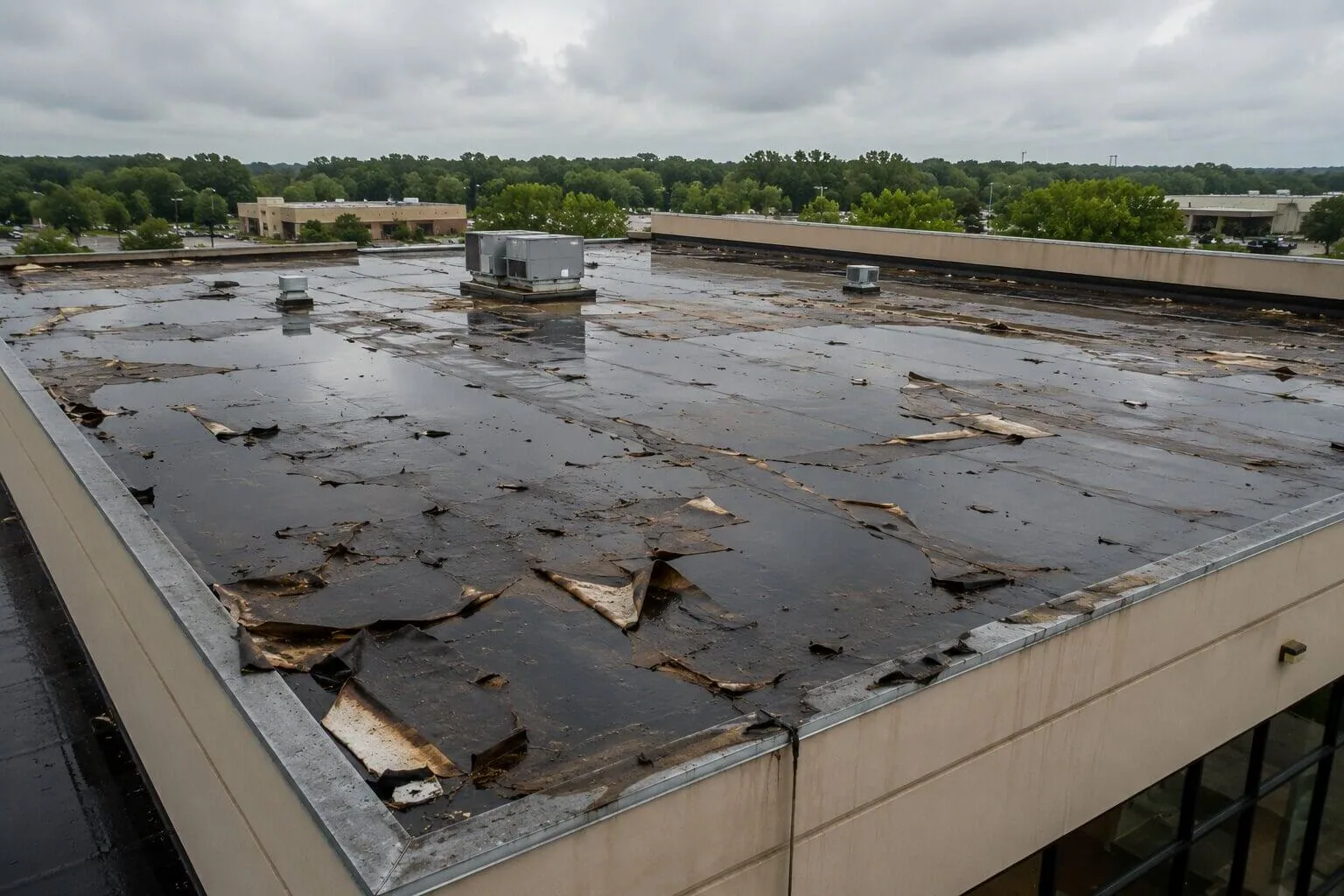
A useful roof inspection connects each finding to a decision. We walk the roof, photograph conditions, and distinguish a maintenance item from a repair that needs prompt attention. On an Elizabeth warehouse, office, or retail property, we check the membrane or metal field, seams, perimeter, penetrations, curbs, drains, and access routes. The report should tell the property team where a condition sits, what it can affect, and what to do next. For facilities near North Avenue, we also account for loading and site access when planning a return visit.
A visual review is not a promise that concealed layers are dry. When moisture, deck condition, or an unclear leak path needs confirmation, we identify the next test rather than guess. The inspection scope can cover a routine condition check, a leak investigation, a roof purchase review, or documentation before a capital decision.
Walk the Roof by System and Detail
We begin with roof access, visible system type, and the areas where water can enter. Seams and laps are checked for separation, open edges, fishmouths, and weak adhesion. At walls and parapets, we look at termination bars, counterflashing, coping joints, and movement transitions. At curbs and penetrations, the flashing corners and seal are examined for splits or gaps. The roof field gets a separate review for punctures, blisters, wrinkles, traffic paths, and old patches.
Drainage receives its own pass. We check strainers, drain bowls, scuppers, overflow routes, and signs that water repeatedly collects. The slope and outlet matter together; debris removal will not correct a drain set too high or a low area that holds water. Where equipment sits on the roof, we inspect support curbs, service clearances, and signs of work by another trade that could have disturbed the membrane.
Findings are tied to the roof area and supported by photographs. We note what is visible and what would need testing. For an occupied building, the report can also identify access restrictions or work areas that affect tenants and maintenance staff. That makes the inspection usable for a repair plan instead of a stack of unlabeled images.
Check Moisture Before It Is Covered
A dry surface does not prove the insulation below is dry. We look for blistering, open seams, persistent interior leaks, soft areas, and patch history that may signal water entry. Infrared imaging can locate temperature patterns worth testing, especially across a large roof, but it does not establish a wet core by itself. Selective cuts can confirm the materials and moisture at specific locations. We mark each test point so the result is not extended beyond what it shows.
The inspection documents the building’s roof slope, drainage layout, and actual leak history. We check whether drains and overflows are clear, trace visible water paths, and note areas that hold water after rainfall. If an outlet connects to site piping, the owner may need a separate review of that system. Those observations help distinguish roof repairs from work outside the roofing assembly.
If test results show wet insulation, we outline the area requiring removal or further evaluation. A few dry samples cannot rule out moisture elsewhere. The report separates confirmed conditions from questions that need another test, so an owner can choose whether to proceed with a focused repair, a broader survey, or replacement planning.
Turn Findings Into a Work List
Each report item should state the location, observed condition, and recommended action. We group urgent repairs, near-term maintenance, and items to monitor instead of blending them into one undifferentiated list. Photos show the detail from a useful distance and close enough to see the failure. Where the issue cannot be confirmed visually, we say what testing would answer the question.
For a property in Midtown Elizabeth or Elizabethport, the roof report should still follow the building’s own layout. We do not infer condition from the district or from nearby development. We record roof sections, curbs, drains, and access points as observed. The property team can then match the findings to tenant areas, equipment, and planned capital work.
When repairs are recommended, we can scope the next step with a commercial roof repair or a targeted leak investigation. The inspection record remains separate from the repair proposal, so the owner can see which observations led to each work item. If a roof has a broader moisture pattern, we can discuss a moisture survey before choosing an assembly-wide solution.
Set an Inspection Around Building Use
Inspection timing depends on roof access, weather, operating hours, and the reason for the visit. A scheduled condition review may need only a roof contact and safe access. A leak investigation may require interior coordination and an immediate path to the area below. Before arrival, we confirm roof hatch or ladder rules, escorts, fall protection requirements, and any restrictions near mechanical equipment.
Elizabeth’s North Avenue corridor mixes port-related truck movements with retail, hotels, and other commercial activity. A site there may need a service window that avoids delivery peaks or customer traffic. We coordinate the route with the property contact and keep equipment clear of active work areas. At a large roof, we divide the inspection into sections so photos and notes can be matched to a location instead of filed as one broad observation.
After a severe storm, an inspection can check for loose edge metal, punctures, displaced equipment supports, blocked drains, and interior water entry. Wind, hail, and intense rain can affect edges, penetrations, and drains. A weather alert does not prove roof damage, so we record conditions seen at the building and recommend follow-up only where the inspection supports it.
Keep the Roof Record Current
Roof conditions change as equipment is replaced, other trades cross the membrane, and repairs age. Keep inspection photos with service records, roof plans, and prior leak reports. On the next visit, those records help compare an old seam repair with a new opening or show whether a drain problem has returned. If another contractor installs wiring or piping, note the new penetrations and arrange proper flashing before closing the work order.
We can pair the inspection with preventive maintenance to clear debris, check accessible details, and address small defects before they spread. If the report shows recurring moisture or extensive deterioration, we explain options for restoration, recover, or replacement. A replacement review should include the deck, insulation, edge heights, drainage, and how the building will remain protected during construction.
Commercial Roofing Questions
What is included in a commercial roof inspection?
We review the roof system, seams, laps, edges, penetrations, curbs, drainage, and visible repairs. Photos and notes identify each condition and the recommended action. If moisture below the surface or deck condition needs confirmation, we suggest a test at a marked location. The scope can be adjusted for leaks, purchase review, or capital planning.
Can a visual inspection tell whether insulation is wet?
Not by itself. Blisters, stains, or soft areas can identify locations for further checking, but moisture below the membrane may need infrared screening and selective core cuts. Each test supports a finding at its location. We explain what was confirmed and what remains uncertain before recommending a repair or replacement.
How quickly can you inspect an active leak?
We respond around the clock for emergency calls. Access, weather, and site safety determine when the roof can be inspected. If water is entering, the first visit may focus on temporary protection before a full review of the roof system. We then trace the source and define the permanent repair.
Will the inspection report include repair costs?
The report describes observed conditions and recommended work. When requested, we prepare a separate repair scope and estimate that identifies materials, access, and concealed-condition assumptions. This keeps the inspection findings distinct from the proposed work and makes it easier to compare priorities.
Can you inspect a roof before a property purchase?
Yes. We can document visible roof conditions, test suspect areas when authorized, and note limitations to access. A purchase review should identify the roof system, drainage, repair history available to the owner, and issues that may affect near-term capital planning. We do not infer concealed conditions without testing.
Schedule a Roof Condition Review
Tell us the building use, roof access rules, leak history, and reason for the visit. We will document the roof conditions and identify practical next steps for your Elizabeth property.