
Johns Manville Commercial Roofing in Elizabeth, NJ
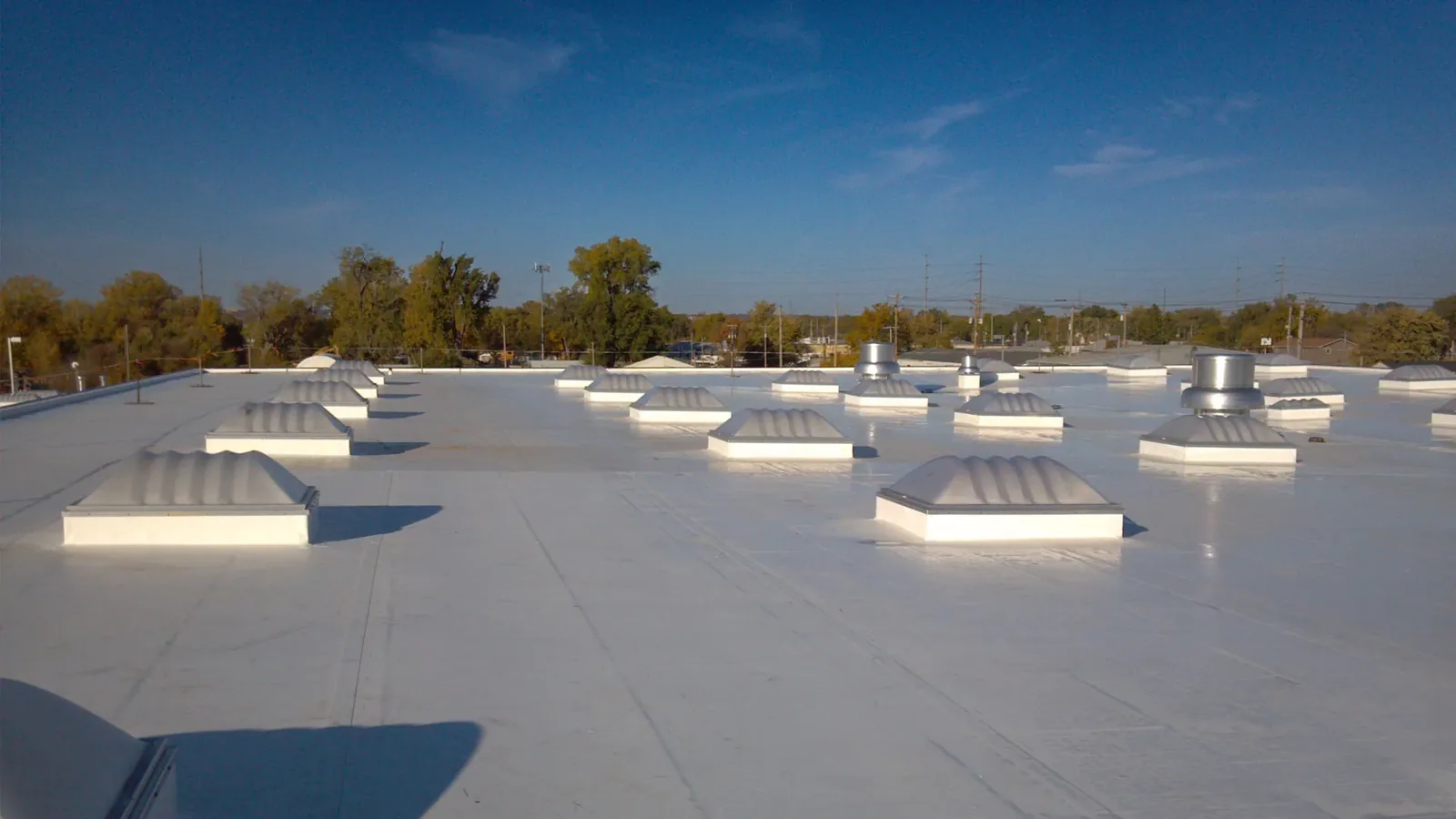
A modified bitumen lap and a thermoplastic seam weather differently, so system identification comes before the repair decision. Johns Manville makes commercial roofing products across several system types, so the first step is to identify the roof in front of us. We inspect the field, edges, penetrations, drains, and prior repairs, then match the proposed work to the installed assembly. In Elizabeth, buildings serving logistics, retail, and small manufacturing can remain active during roof work. The scope must account for the material and the operating schedule together.
Identify the System Before Choosing a Repair
Johns Manville product families include TPO, PVC, EPDM, and modified bitumen. Those materials do not share one seam method or patch detail. A thermoplastic sheet is heat welded, while EPDM relies on compatible seam and flashing materials. Modified bitumen is built from asphaltic plies, with surface and tie-in details that differ from single-ply work. We confirm membrane markings where available, review project records, and compare what the roof shows with the listed assembly before selecting materials.
That distinction changes the repair boundary. A patch that bonds to one surface may not adhere to another, and a tie-in between different systems needs a designed transition. We look for earlier overlays, coating, and repair layers that could hide the original roof. If identification remains uncertain, the owner can authorize a test opening before choosing a broad repair or recover. The roof inspection records the visible system and the questions that need confirmation.
Match Layers, Attachment, and Roof Use
The membrane is only the exposed part of the roof. Deck, vapor control, insulation, cover board, attachment, and perimeter securement all affect how a Johns Manville assembly performs. We inspect accessible edges and penetrations, review available drawings, and note where rooftop equipment or later trade work interrupts the field. A replacement scope should state which layers remain, which are removed, and how the new system meets walls and curbs. For a recover, we establish whether existing materials and moisture conditions permit another layer.
A cold storage building, warehouse, and occupied retail roof can impose different traffic and interior-protection needs, but the assembly still follows its tested system and project design. We discuss staging, material delivery, equipment shutdowns, and protected paths before opening sections of the roof. If a building operates through multiple shifts, dividing the work into zones may limit disruption. The TPO membrane assembly and a modified bitumen system require their own compatible details rather than a generic material substitution.
Trace Seams, Flashings, and Water Paths
A seam opening can admit water without placing the interior stain directly below it. Insulation joints, deck flutes, and framing may carry moisture before it appears inside. We map the affected room, inspect the roof above, and compare the path with nearby drains, curbs, wall transitions, and previous patches. On a single-ply system, seam condition and flashing geometry deserve close attention. On modified bitumen, we examine laps, splits, blisters, and the way the roof terminates at edges and penetrations.
For a manufacturing building in Midtown Elizabeth and Elizabethport, loading and equipment access can shape the roof sequence, so the work zone and interior protection need property-specific review. Those uses can put loading, equipment, and occupied space below roof work. A repair scope should identify the exact roof zone and protect the activity below it. We can compare a seam repair with a broader repair scope after the surrounding material is checked.
Keep Roof Drainage in the Scope
Water that remains around a drain may point to debris, a blocked outlet, a deflected deck, or an elevation problem. We inspect drains, overflows, scuppers, and discharge points, then note whether the roof surface directs water toward them. A membrane replacement alone will not correct every slope or site connection. The proposal should separate roof work from plumbing or site drainage changes and identify where another trade is needed. The drain and scupper review gives the owner a defined place to start.
A riverfront roof outlet and the downstream site connection are separate conditions. We inspect the drains and overflows at the building, photograph visible ponding or blockage, and identify any discharge work that needs a separate trade. We photograph any standing water, mark its extent, and check the route to each outlet. If recurring ponding or overflow is reported, the roof condition report can distinguish membrane repairs from drainage work that requires additional design.
Compare Repair, Recover, and Replacement
A localized repair may fit when the defect is limited and the surrounding substrate, seams, and flashing remain sound. Multiple failures, wet insulation, weak attachment, or widespread deterioration can change the decision. We explain which observations support each option and identify concealed conditions that could alter price or schedule. Removal depth, insulation replacement, equipment moves, disposal, tie-ins, and weather windows are practical cost and timing drivers. A recover needs a suitable existing assembly and sound attachment; it should not cover wet layers or unstable details.
Coatings have a separate suitability test. Surface preparation, existing material, drainage, and the condition of flashings determine whether a coating system belongs in the comparison. It does not replace failed insulation or correct a damaged deck. Where replacement is needed, the roof replacement plan sets out removal, new layers, perimeter work, and occupied-building controls. For a roof recover review, we document retained layers and open questions before the owner selects a system.
Leave a Usable Record for the Next Roof Walk
Closeout should identify the installed Johns Manville materials when product records are available, the work zones completed, and details that still need attention. We provide photographs and note repairs, transitions, drains, and penetrations that may be disturbed by later HVAC or solar work. Keep those records with the roof plan and maintenance log. A condition report can help compare later observations without treating a prior repair as proof that the entire roof remains sound.
For an owner comparing manufacturers, Carlisle SynTec systems and GAF products have separate specifications and compatible components. We assess each assembly on its own terms. Emergency roof service remains available around the clock when an active leak threatens an occupied space; the response begins with safe access and a defined repair area, followed by a permanent scope once conditions are visible.
Commercial Roofing Questions
How do we identify a Johns Manville roof when records are missing?
We inspect visible membrane markings, seams, flashing, edges, and prior repairs, then compare those details with any drawings or material records. If the layers remain uncertain, a limited test opening can confirm the assembly before a larger scope is priced.
Can an EPDM repair detail be used on a Johns Manville TPO roof?
No. TPO and EPDM use different seam and repair methods. We confirm the membrane and use compatible products for that assembly, with a designed transition where the roof meets another material.
When should an owner consider replacing rather than patching?
We compare the number and spread of failures, insulation moisture, deck condition, attachment, and perimeter details. A limited defect with sound surrounding material may support repair; broader problems may justify comparing recover and replacement.
Will a new membrane correct standing water near Elizabeth River properties?
Not by itself. We inspect the roof slope, drains, overflows, and discharge points, then separate membrane work from plumbing or site drainage changes. The report identifies what was visible and which connection needs additional review.
What should the closeout record include?
Keep the materials installed when known, photographs, repaired zones, transitions, drain work, and any unresolved conditions. Record later rooftop trade changes so future inspections can distinguish original work from new penetrations.
Arrange a Johns Manville Roof Review
Share available system records, leak locations, operating hours, and access limits. We will inspect the roof and outline compatible repair or replacement choices.