
GAF Commercial Roofing Systems in Elizabeth, NJ
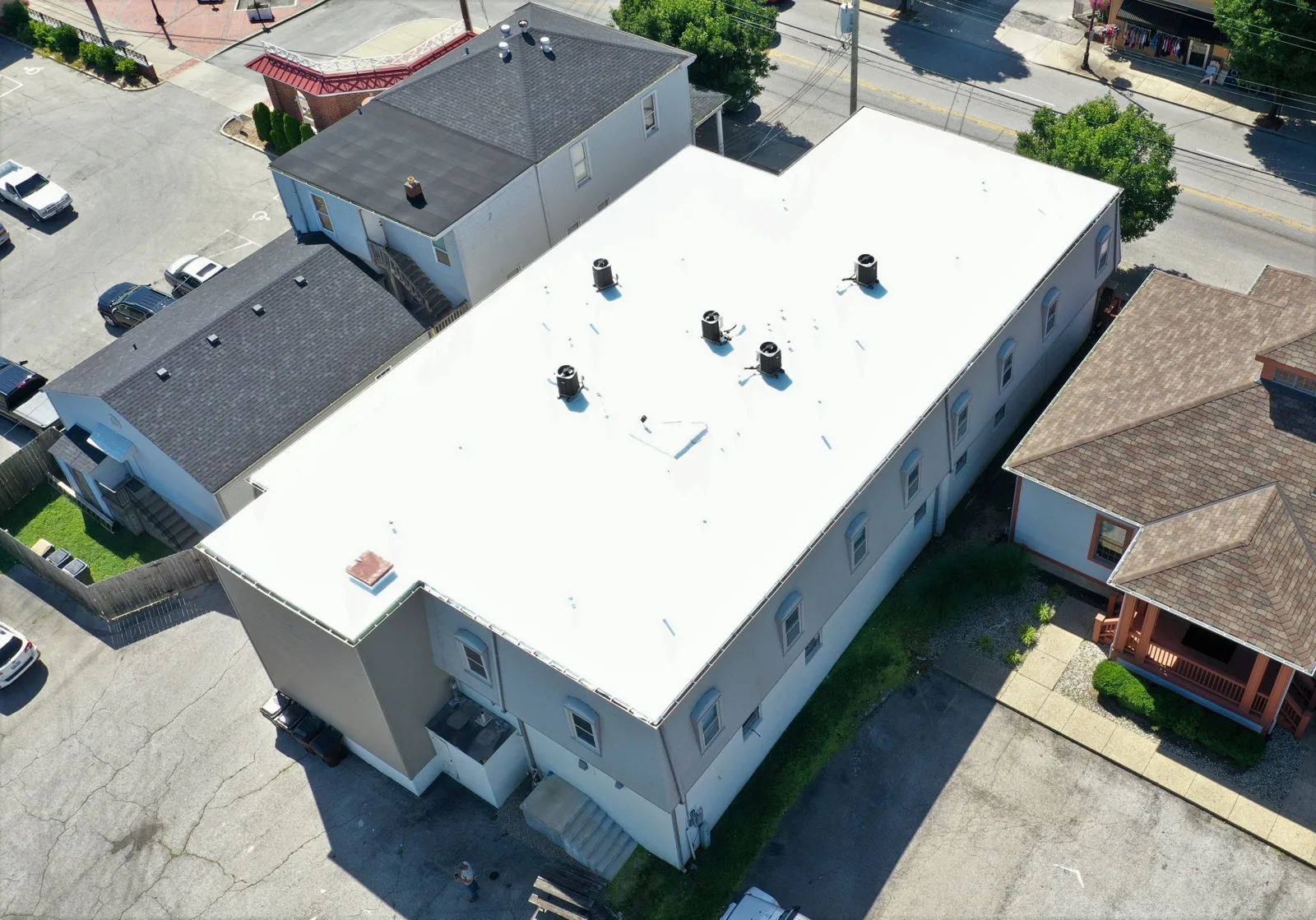
A broad warehouse roof can contain a single-ply field, asphaltic layers, metal edges, and later equipment details in the same assembly. GAF offers commercial TPO, PVC, asphaltic, built-up, and coating systems; the correct choice begins with what the building has and what the owner needs next. We inspect the membrane, attachment, insulation, drainage, and transitions before discussing a compatible scope. Elizabeth includes warehousing, logistics, retail, small manufacturing, healthcare, and local services, so the roof may sit above active operations rather than an empty floor. A commercial roof inspection can establish the system and visible condition before a GAF option is considered.
Identify the Existing Assembly First
Product category is only one part of the decision. We look for membrane markings, seam construction, edge treatment, attachment pattern, cover board, and the material at curbs and walls. Records may identify a GAF system, but an old invoice does not show every later repair or trade penetration. We compare the documents with field details and label unknown layers rather than guessing. If the existing surface is asphaltic, a built-up roof, or an older single-ply membrane, compatibility and moisture below the surface need review before recover work is priced. A TPO membrane scope and a PVC roof assembly use heat-welded seams, yet substrate, detail, and product requirements still matter to the tie-in.
Match the System to the Roof Decision
TPO and PVC single-ply membranes have seams joined with heat, while asphaltic systems rely on layered bituminous materials and their specified application method. Built-up roofing forms a multi-ply assembly, and coatings depend on a prepared substrate that can accept the selected material. Those differences affect removal, access, odor and heat restrictions, and sequencing around occupied space. We review slope, drainage, insulation, cover board, deck, equipment, and the condition of the existing field before comparing options. A recover assessment may be appropriate only when the existing layers and attachment support it. Where a local opening is confirmed, a repair scope can define how new material will meet sound existing work.
Product categories should be compared on the same roof facts. For example, Carlisle SynTec systems and Johns Manville systems offer their own membrane and accessory combinations; their details are not substitutes for checking the GAF system selected for this building. The owner can compare attachment and materials while keeping each manufacturer's installation requirements separate.
For a low-slope roof, the design also needs to account for insulation thickness, cover-board type, attachment, and transitions to existing walls. The membrane choice cannot resolve a drain set too high or a deck that needs structural work. We compare the field assembly with each detail so the proposed package works as a continuous roof rather than a list of separate products. Where existing conditions differ from the drawing, the owner reviews the change before installation continues across the remaining area.
Seam method and attachment influence the daily installation plan. Heat-welded membrane requires a clean lap and settings suited to the material and site conditions; adhered areas require the specified surface preparation and adhesive handling. Edges, corners, and penetrations need the attachment and flashing details to carry through. We keep a protected stopping point at each shift and record what can remain exposed, if anything, before moving the work boundary.
Carry the Field Material Through Every Detail
Failures often start where the membrane changes direction or meets another material. We inspect parapets, coping, curbs, drains, scuppers, penetrations, and expansion joints as part of the assembly, not as separate accessories to choose later. A GAF system should be detailed using components that fit the particular system instructions and roof conditions. We verify the surface is clean and prepared, check the termination and tie-in, and identify who handles equipment resetting. At a warehouse, a pipe or curb added by another trade can interrupt the membrane field; that opening needs a roof detail compatible with the surrounding assembly. A perimeter metal scope can address edge conditions, while an inspection record preserves the field photos and repair boundary.
Plan Work Around Elizabeth Buildings
North Avenue links port truck movement with commercial activity that includes warehouses, retail, and hotels. A roof project near that corridor needs the property's own delivery and lift plan; the street's wider role does not identify a loading dock or access path. Midtown Elizabeth and Elizabethport have older commercial infrastructure, so we confirm roof entry, staging, tenant use, and the area below the work with each contact. For an assessment along North Avenue or a review in Elizabethport, the roof system still determines material and detail selection. We divide work into areas that can be protected before the crew leaves and note any operational constraint that may change the sequence.
Compare Repair, Recover, and Replacement
A manufacturer system is not a reason to replace a roof that can be repaired, and a patch is not a solution when surrounding material cannot hold a tie-in. We show the condition, area included, preparation, removal assumptions, and any concealed condition that could change the work. If widespread deterioration or wet insulation is present, a larger replacement comparison may be appropriate. Cost and timing depend on access, tear-off depth, substrate repairs, equipment moves, drainage corrections, and how much space must remain protected. A restoration review also needs adhesion and system compatibility checked before a coating is proposed. We explain what the owner can approve now and which unknown requires a test or a separate decision.
Keep the System Record with Closeout
At closeout, identify the installed GAF system by the product information available for the project, the roof zones completed, and the details left outside the approved boundary. Include photographs of seams, perimeter work, drains, and transitions, plus any repair or maintenance recommendation. If a warranty document applies, its terms and inspection requirements govern; we do not promise a coverage outcome. Keep the roof plan and product documentation with the building file so later trades can avoid cutting a finished detail without coordination. A roof asset register can connect those documents to the next inspection. This is useful at Elizabeth properties in varied sectors, where staff may change but the condition history still needs to remain tied to each building.
Commercial Roofing Questions
Which GAF system fits a low-slope commercial roof?
Start with the roof that is installed, its condition, and the owner's repair or replacement objective. GAF's commercial range includes membrane and asphaltic categories, but attachment, substrate, drainage, and details determine the assembly. We inspect those conditions before presenting a system option.
Can a GAF membrane go over an existing commercial roof?
A recover depends on the existing layers, attachment, moisture, deck, and compatibility requirements. We inspect the roof and identify where testing may be needed. The proposal states removal assumptions and does not treat a new membrane as a substitute for an unresolved substrate problem.
How are GAF roof edges and curbs handled?
We review the existing termination, wall transition, curb, and equipment interface, then detail the tie-in for the selected assembly. If another trade owns the equipment reset, that handoff is identified before the roof is closed. Photographs show the finished boundary.
What Elizabeth site information helps with a GAF project?
Share the roof plan, prior repair records, leak history, access rules, and any shutdown or delivery limits. North Avenue, Midtown Elizabeth, and Elizabethport have different commercial settings, but each site contact must confirm the actual roof entry and work area.
What should we retain after GAF roofing work?
Keep product and system documents, approved scope, roof-zone photographs, repair notes, and maintenance instructions together. Any warranty term or required inspection comes from the governing document. We can leave a closeout record that identifies completed details and open items.
Arrange a GAF Commercial Roof Review
Share the roof system records, affected areas, and access requirements. We will inspect accessible details and compare compatible repair or replacement options.