Acrylic Roof Coatings for Commercial Buildings in Elizabeth, NJ
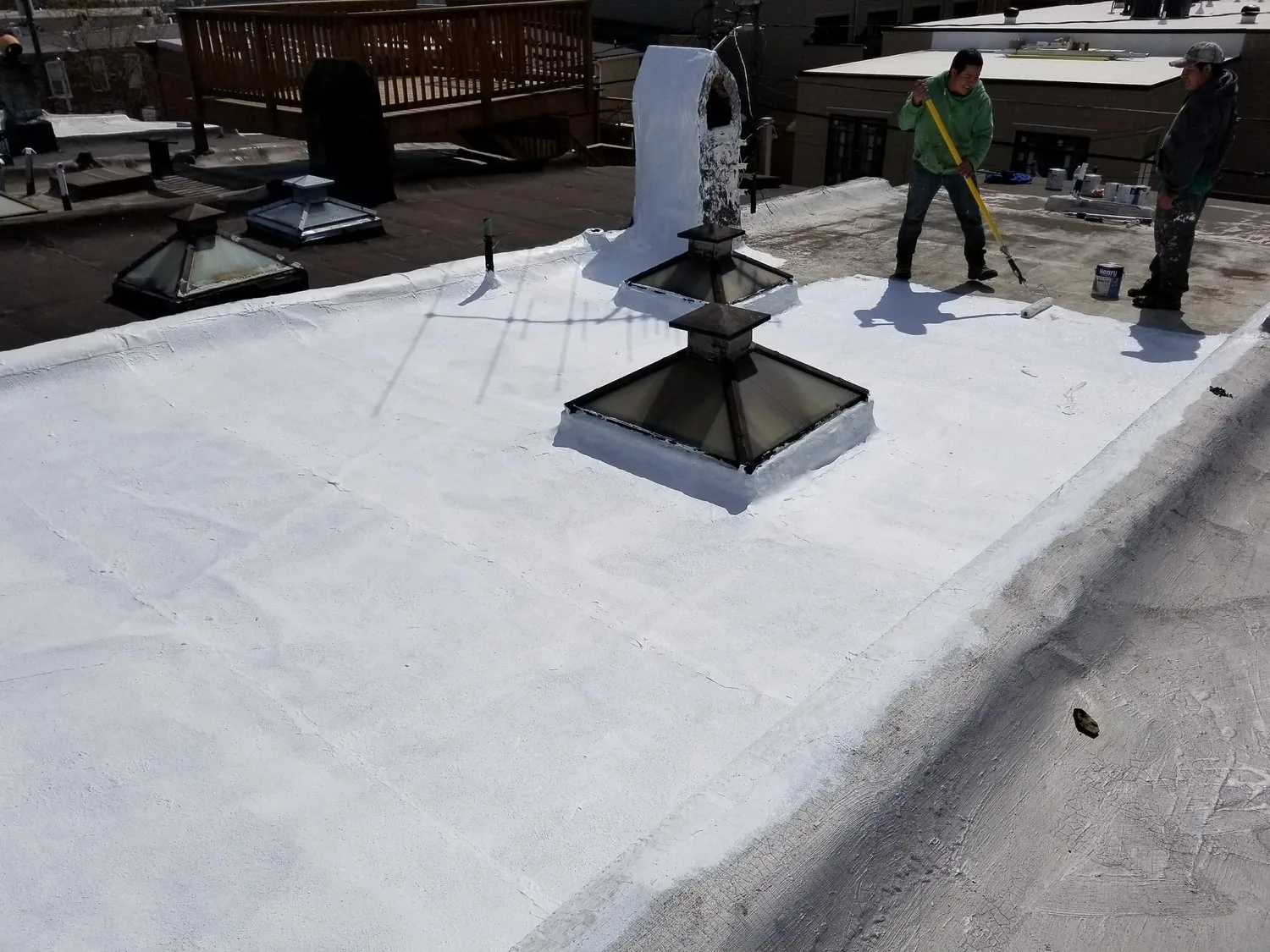
Acrylic coating can restore a roof that is stable, dry, and compatible with the selected system. On a commercial property in North Elizabeth, the coating decision begins with seams, flashings, penetrations, and drainage, not color. We inspect the surface and identify repairs before discussing restoration. A new coating cannot stabilize a loose roof or correct wet insulation below it.
Elizabeth’s buildings include warehouses, retail, and local services with different roof access and occupancy needs. We plan preparation and application around those conditions, keeping outlets clear and coordinating work with the property contact.
Confirm the Existing Roof Is Suitable
We identify the membrane type, prior coatings, and visible condition. Open seams, failed flashing, wet areas, loose material, or weak attachment need correction before a coating is considered. Where the assembly is unclear, selective testing may help determine what layers remain. We explain whether the roof is a candidate and identify what preparation or repair is required.
Acrylic systems have application conditions that affect adhesion and cure. The roof must be clean and dry, with weather suitable for the selected product. We review the forecast, surface condition, and timing before starting. If conditions change, the crew protects the active area and waits rather than applying material that cannot cure as specified.
At a warehouse along the North Avenue corridor, roof access may need to fit deliveries and service calls. We note drains, equipment intakes, loading paths, and the work area below. Protection from overspray and access changes should be planned with the building team before material is brought to the roof.
Prepare Seams and Transitions
Preparation includes removing loose material and debris, cleaning the surface, and allowing it to dry. Existing leaks, failed seams, rusted metal, and damaged flashing are repaired first. The owner should see which tasks are included in the coating scope and which concealed conditions may require additional work. A coating should not be used to hide a repair question.
At curbs, drains, parapets, and penetrations, the system may require reinforcement before field application. We check corners, termination points, and water paths. A leak repair can address active entry, while a drainage review can assess blocked outlets or ponding. Those corrections should be complete before the coating covers the surrounding surface.
If the existing membrane is not stable or compatible, a recover or replacement roof may be more suitable. The choice depends on moisture, substrate, attachment, and project requirements. We compare the removal or restoration work and define the edge, curb, and drain transitions in the scope.
Apply Acrylic in Measured Work Zones
Application proceeds only when conditions meet the system requirements for temperature, moisture, and cure. We divide the roof into manageable zones, complete detail reinforcement, and apply the field coating at the specified coverage. Drains remain open and nearby surfaces are protected. Wind or approaching rain can require a pause, especially where material has not cured.
Coverage and thickness are checked as work advances. We look for thin areas, pinholes, missed sections, and contamination. If the substrate changes, the property contact receives photographs and an explanation before the scope expands. Each zone is completed and protected before the crew moves on, reducing the amount of active roof exposed at one time.
For a property in Elizabethport, tenant or loading activity can affect roof access and staging. We coordinate deliveries, work hours, and any notice required for occupied areas. Equipment intakes and vehicles remain protected, and the property contact knows which roof zones are active.
Compare Acrylic With Other Systems
Acrylic and silicone coatings have different performance characteristics and water-exposure requirements. SPF includes a foam layer beneath its protective coating, while a membrane replacement is a different assembly. We compare system requirements with the existing roof, drainage, exposure, and maintenance plan before recommending a path.
A coating is not a substitute for restoring slope, correcting drainage geometry, or replacing wet insulation in the roof assembly. Near the Elizabeth River, we check roof outlets, overflow paths, and discharge tie-ins before recommending a coating. The walk records where water leaves the roof and whether an outlet is blocked or undersized. If ponding is caused by roof geometry, the scope should identify a separate correction.
After coating, roof traffic and other trades can wear or puncture the surface. The owner should preserve service paths and make sure equipment workers know the membrane was restored. If a detail needs cutting or new attachment, coordinate the repair before work begins so the coating and flashing are returned to a compatible condition.
Recoating should follow a condition review, not an automatic calendar date. We check whether the existing coating remains bonded, whether reinforced seams are intact, and whether repairs have been made with compatible products. If the roof has blisters, open transitions, or damp areas beneath the surface, those conditions need resolution before another layer is applied. The owner should receive a written scope that states cleaning, repair, reinforcement, application, and inspection steps.
Where the coating is sound but worn at a walkway, equipment route, or drain, the repair may be limited to those locations. We record the area and confirm the new material connects to the existing coating. A broad application should not conceal a localized defect that needs removal or substrate repair.
Inspect and Maintain the Coating
Closeout includes review of the field, seams, reinforced details, edges, penetrations, and drains. Photographs identify completed zones and any condition outside the approved scope. Keep product data, preparation details, and repair records in the roof file. Those notes help future crews choose compatible materials.
An inspection can document coating wear and new damage, while routine maintenance checks outlets and details after rooftop service. Request an inspection if coating blisters, separates, or wears through at a service path. A small defect should be evaluated before water reaches the underlying assembly. Record the location and repair method for future review.
Share the existing roof type, coating history, known leaks, access limits, and roof plan when arranging a review. Commercial Roofers Elizabeth can inspect accessible conditions and explain whether acrylic restoration, another system, or replacement fits the roof. Keep photographs and product details with the building’s roof history for future work.
Commercial Roofing Questions
Can acrylic coating be applied over an existing membrane?
Only when the membrane is stable, dry, clean, and compatible with the selected system. Failed seams, wet insulation, and loose attachment need attention first. A test opening may be appropriate if the assembly is uncertain.
Does acrylic coating correct ponding?
No. Coating does not change roof slope. A drain correction, tapered work, or another repair may be needed depending on the cause. Inspect the roof geometry and outlets before choosing a restoration scope.
What weather is needed to apply acrylic coating?
The selected system sets limits for temperature, surface moisture, and cure. Wind and rain can affect application. The crew should monitor conditions and pause when the roof no longer meets product requirements.
How are seams treated before coating?
Loose or failed seams are repaired, and reinforcement is added where the system requires it. The surface is cleaned and prepared so coating can bond. The scope should identify repairs and detail work completed before the field application.
How should an acrylic-coated roof be maintained?
Inspect the coating, drains, seams, penetrations, and service paths. Record damage caused by other trades and use compatible materials for repairs. The interval should follow system guidance and actual roof activity.
Review Acrylic Coating Suitability
Share the roof type, coating history, leak locations, drainage concerns, and access limits. We will inspect the surface and explain restoration options.