
Silicone Roof Coatings in Elizabeth, NJ
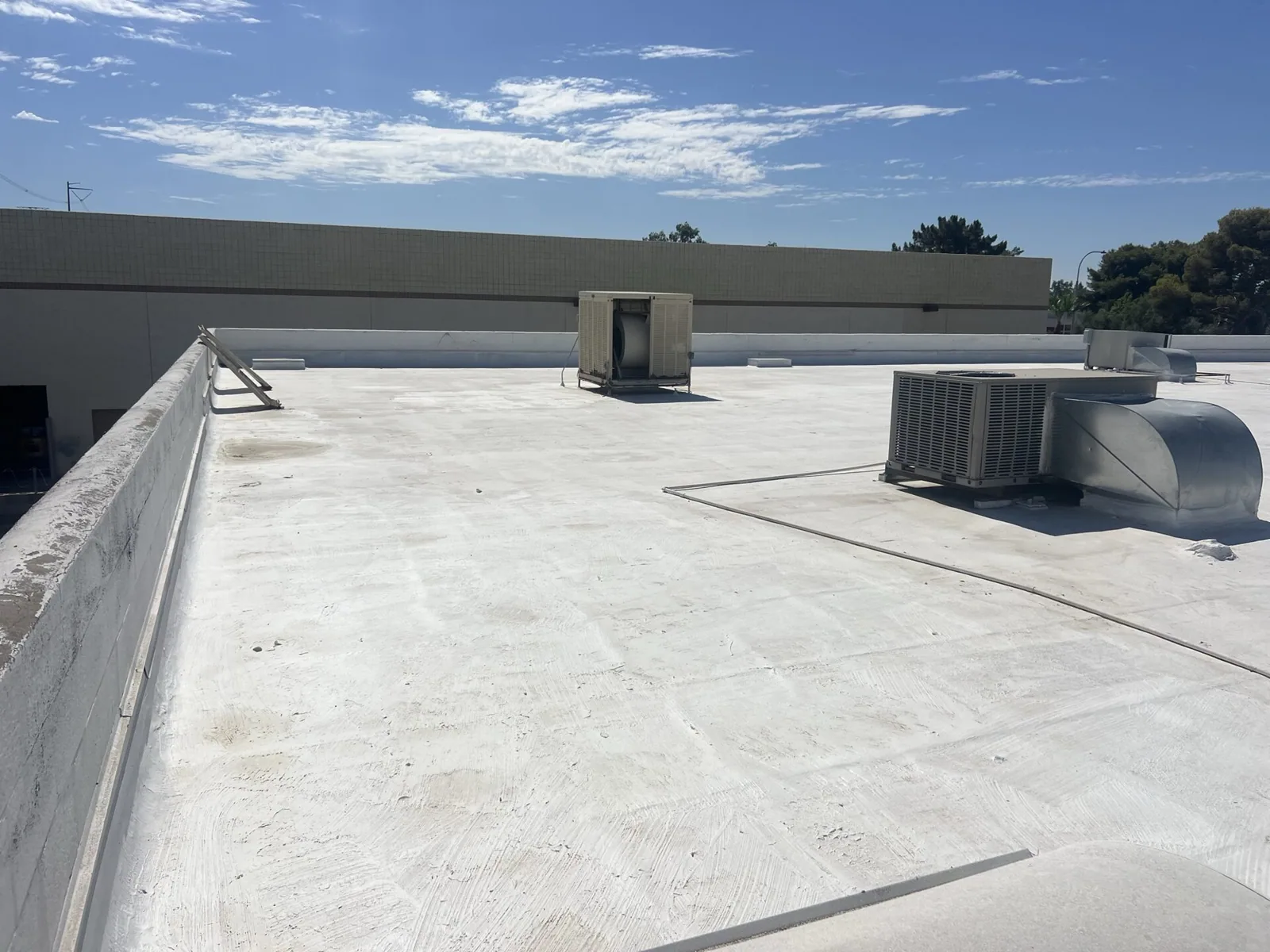
Silicone coating can restore a suitable roof surface, but it is not a repair for every assembly. On a commercial roof in Midtown Elizabeth, the first question is whether the existing membrane is stable, dry, and compatible with the coating system. We inspect seams, flashings, penetrations, drains, and prior repairs before discussing restoration. The surface must be prepared and the details corrected before a coating covers them.
Elizabeth’s commercial economy spans several sectors, but a coating recommendation turns on the actual roof assembly and observed condition. Hotels are part of the North Avenue corridor mix; we verify equipment, roof access, and occupied-space needs at each site before sequencing the application. Roof access, equipment, and occupied space affect how coating work is staged. We plan the application around the property and the system requirements.
Confirm the Roof Can Be Coated
We identify the roof material, prior coatings, surface condition, and repair history. Loose or incompatible coating, wet insulation, failed attachment, or widespread membrane separation can make restoration unsuitable. A coating cannot strengthen a damaged deck or dry an assembly. Where moisture is suspected, testing or selective openings may be needed before the owner commits to a system.
Drainage and ponding are reviewed separately. Silicone may tolerate exposure to standing water in some system configurations, but it does not change roof slope or clear an obstructed drain. We inspect outlets, overflow paths, curbs, and low areas and identify what work is needed before coating. If taper or a drain correction is required, it should be included as a separate scope.
Near the North Avenue corridor, commercial properties may have equipment service and regular roof traffic. We note access paths, support pads, and areas where another trade can damage the finish. The property contact identifies equipment that must remain available while the coating zones are active.
Prepare the Surface and Details
Before a silicone restoration, we test representative areas for adhesion and check that existing repairs, metal edges, and membrane transitions can accept the specified system. The scope identifies cleaning limits, dry-time conditions, primer locations, and repairs that must be complete before coating starts.
At seams, curbs, drains, and wall transitions, reinforcement may be required before the field coating. The detail scope identifies fabric or additional coating where the system calls for it. Drains remain open and edge terminations must connect cleanly. A leak repair can trace active water entry, and a drainage review can examine ponding or outlet issues before restoration begins.
If the existing system is not a coating candidate, a recover or replacement roof may be more appropriate. The owner should compare removal limits, wet insulation repair, and edge transitions rather than choosing based on surface color. We describe why the roof passes or fails the suitability review.
Apply Coating in Planned Sections
The selected product has requirements for temperature, surface moisture, wind, and cure. We monitor conditions throughout the shift and pause when they move outside the specified range. Application is divided into zones that can be prepared, detailed, coated, and checked in sequence. The crew protects drains, equipment intakes, vehicles, and adjacent property from overspray.
Application proceeds in measured sections so the crew can compare material use with the approved coverage rate. We inspect wet-film readings, reinforce designated transitions, and note interruptions that could affect cure or tie-ins. Any change in substrate condition is recorded before that section advances.
For an occupied warehouse in Elizabethport, staging and odor control may affect the building schedule. We coordinate the application window, delivery route, and access limits with the property contact. The roof should remain protected between shifts and during cure. If weather threatens uncured material, the crew secures the area and resumes when conditions allow.
Compare Silicone With Other Restoration Systems
Silicone and acrylic coatings differ in application properties and water exposure. SPF combines a foam layer with a protective coating, while a membrane replacement installs a different roof assembly. The choice follows substrate, drainage, exposure, and project requirements. We specify the complete system rather than referring only to a coating type.
A silicone restoration may require periodic recoat or repairs where foot traffic, equipment work, or weather damages the surface. The owner should understand inspection access and how penetrations will be maintained. Rooftop trades need compatible materials and a repair contact before they disturb the coating. A patch using an incompatible product can create a weak bond or leave a visible opening.
A coating can renew a sound, compatible surface, but it cannot correct a moving deck, failed insulation, or an outlet set above the intended drainage plane. We separate those conditions in the inspection record and explain which work belongs in the coating scope and which needs a roofer or another trade.
Recoating is a separate decision from the initial restoration. The owner should review coating wear, adhesion, exposed reinforcement, and the condition of the underlying roof before another layer is added. Surface cleaning and preparation may be required, and the selected product must be compatible with the existing coating. The maintenance record should show where material is thin, where repairs were made, and whether equipment routes have changed since the prior application. That review helps avoid adding a new layer over a defect that needs removal or repair first.
Inspect and Maintain the Coated Roof
At completion, we inspect the field, seams, reinforcement, flashings, edges, and drains. The closeout record identifies the product, preparation, application areas, and any limitations. Photographs show repaired details before and after coating. Keep that information with the building roof file so future trades can select compatible materials.
A roof inspection can document coating condition, while routine maintenance checks drains, penetrations, and areas disturbed by service work. Request a review if the surface blisters, separates, or shows wear at equipment paths. Prompt repair can keep a local defect from exposing a larger area. Note the repair location, material, and date in the roof record so later crews can follow the work history. Keep it accessible.
Share the existing roof type, repair history, leak locations, and access limits when arranging a coating review. Commercial Roofers Elizabeth can inspect accessible conditions and explain whether restoration is suitable or a different roof scope is needed.
Before work, the owner should know whether the proposal includes test patches, surface preparation, transition repairs, and a defined stopping point if adhesion differs between roof areas. These checks keep the coating decision tied to observed conditions and make the acceptance review more concrete.
Commercial Roofing Questions
Can silicone coating be applied over any roof?
No. The existing surface must be stable, dry, and compatible with the system. Failed attachment, wet insulation, or broad membrane separation may require repair or replacement before restoration is considered.
Does silicone coating fix ponding water?
No. It does not alter roof slope or clear drains. The inspection should identify whether ponding comes from blockage, settlement, insulation compression, or roof geometry. Drainage corrections should be defined separately.
How much preparation does a silicone roof need?
Preparation can include cleaning, removal of loose material, repair of seams and flashings, and priming where required. The scope depends on substrate and coating history. The surface must meet system requirements before application.
Can a coated roof be walked on?
Access depends on the coating system and building requirements. Use designated paths and avoid dragging tools or equipment. Rooftop trades should report damage and use compatible repair methods rather than covering a cut with an arbitrary sealant.
How long before a silicone coating needs service?
Service timing follows system guidance, roof traffic, drainage, and surface condition. Inspect after other trades work on the roof and after severe weather. The closeout information should describe maintenance and compatible repair materials.
Check Coating Suitability
Share the existing roof type, coating history, leaks, drainage concerns, and access limits. We will inspect the substrate and explain restoration options.