
Commercial Roofing for Insurance Restoration in Elizabeth, NJ
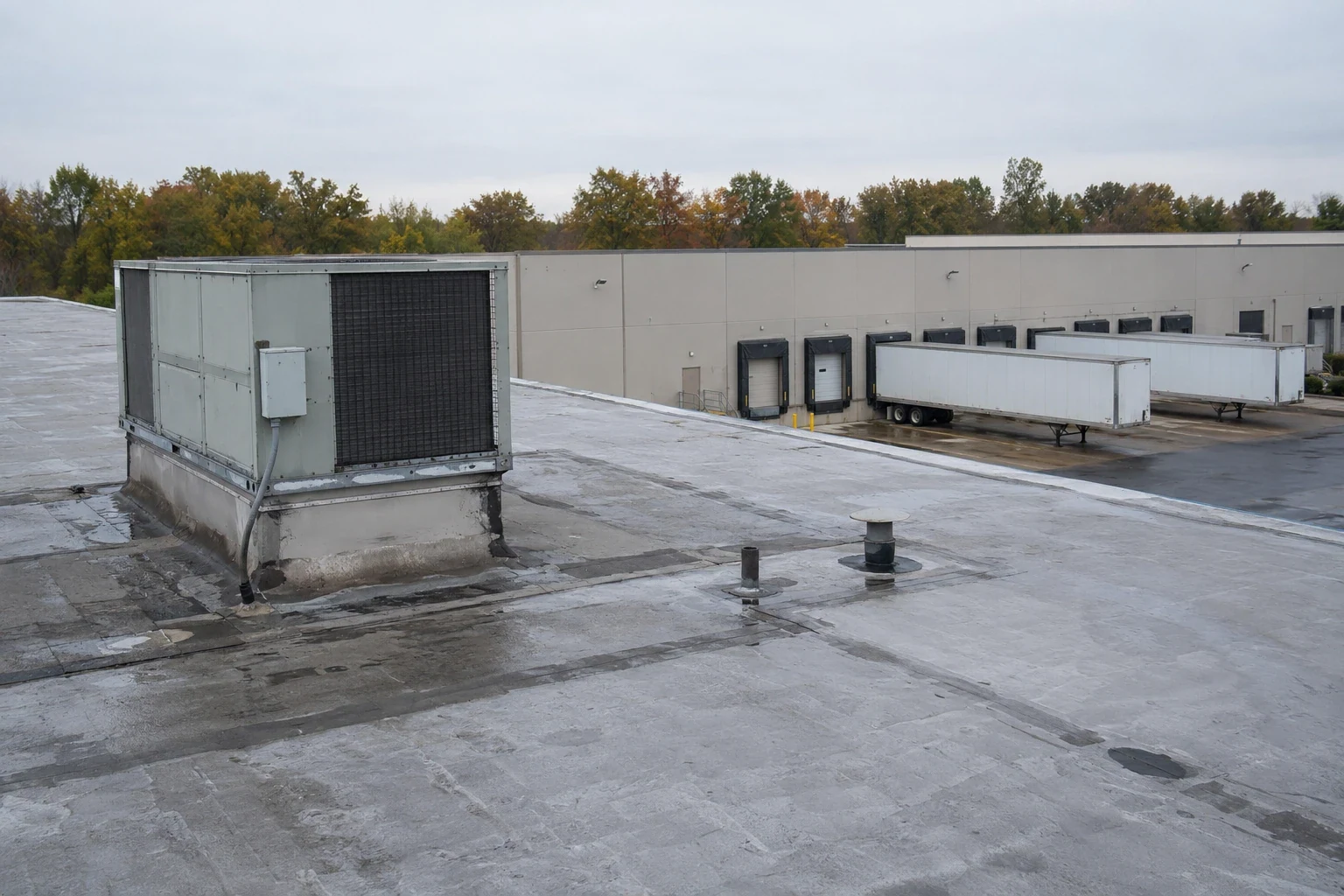
After a storm or sudden leak, a property owner needs a clear record of the roof condition and the work required to protect the building. Elizabeth's North Avenue corridor serves port traffic alongside retail, hotels, warehouses, and other commercial development. That local setting does not prove damage at a particular property. We inspect the actual roof, photograph visible conditions, and separate temporary protection from permanent repair so owners, adjusters, and restoration teams can review the same work boundary.
Share the reported event date, leak locations, prior repair history, roof drawings, and any access limits. We compare interior reports with seams, penetrations, drainage, and edge conditions above. The resulting records identify what was observed, what was repaired, and what remains uncertain. They support a scope discussion, not a promise that a carrier will accept coverage.
Record the Condition Before Repair
We identify the roof system, affected zone, visible damage, and adjacent details that could change the repair. A ceiling stain may be separated from the entry point by insulation or the deck. We trace the likely path and photograph the roof detail at issue. If a selective opening is needed to confirm concealed material, the owner receives a description of what it would establish before additional removal is approved.
For a storm-related report, we look for displaced edge metal, open seams, punctures, impact marks, disturbed flashings, and blocked drains. We also record older wear or earlier patches visible in the same area. Separating these observations helps the owner review the current condition without assuming that every defect came from one event.
A commercial roof inspection can provide a broader condition record. For a reported weather event, storm-damage roof repair can define the affected work area. A condition report can keep photographs and deferred items organized by roof zone for the property file.
Elizabethport and Midtown Elizabeth are established commercial areas with infrastructure needs. Those area conditions do not establish the roof age, damage, or construction of any building. We confirm the assembly and access at the property under review.
Separate Emergency Protection From Permanent Work
Wind, hail, tornadoes, and intense rain can leave edges or penetrations exposed, but a regional alert cannot establish damage at a building. After a reported event, inspect the named roof zones and record visible change separately from the loss account. Those hazards support prompt inspection after a reported event, but do not prove a specific building was affected. We record visible conditions and their locations, then identify whether a temporary measure is needed to limit active water while the permanent scope is evaluated.
In Elizabeth, low riverfront ground carries flood and storm-surge exposure. We keep site runoff distinct from roof intrusion by recording drains, scuppers, low areas, and terminations before assigning work between roofing and drainage trades.
A temporary cover or seal can reduce exposure while the owner reviews the permanent repair. The record should say where it was placed and what still needs correction. If wet insulation or damaged deck appears after opening, photographs and a change scope give the owner a basis for deciding whether to expand the work. We do not treat a concealed condition as confirmed until it is observed.
Emergency roof response can address an active opening when conditions allow. For a defined damage area, commercial roof repair can document the lasting tie-in and any deferred item.
Keep the Property and Restoration Teams Aligned
The owner or restoration lead confirms access, tenant routes, delivery windows, lift locations, and any interior area that needs protection. We mark the roof zone and work boundary, then set the daily closeout point. If the property remains open, material handling and debris routes follow the owner's approved path.
Photos should be dated and tied to recognizable roof details, not just a broad view. We can identify the observed seam, curb, drain, or edge and record whether a repair was temporary or permanent. If another contractor is handling interior drying, ceiling removal, or equipment work, the roofing scope states where that work meets the roof repair.
Restoration work often overlaps with drying, ceiling removal, electrical checks, and contents protection. Before roofing begins, we name the transition point between the opened roof and the interior team's work area. The owner confirms the approved access and staging plan; our daily closeout note records the temporary protection left in place and the permanent detail still awaiting approval.
Property management coordination can help with tenant notices and building records. A general contractor handoff can define trade interfaces when a larger restoration is underway. The owner decides who can approve a change to the work boundary.
Define the Restoration Scope and Exclusions
A repair scope identifies the affected roof zone, compatible materials, tie-in limits, and conditions left for further review. If the surrounding assembly can accept a durable repair, the proposal can remain local. If failures extend across multiple seams or water reaches insulation or deck, the owner may compare a broader restoration or replacement.
Recovery depends on moisture, attachment, drainage, and edge conditions. Replacement may be appropriate when the existing assembly cannot support isolated corrections or the damage reveals widespread deterioration. We describe removal depth, access, temporary protection, and cost or timing drivers through the field conditions. A scope should not claim that an insurer will approve an option or that every visible condition belongs to the reported event.
For projects that change roof discharge or join a redevelopment scope, confirm the applicable local permit and stormwater requirements before work begins. Check current Elizabeth requirements before adjusting roof outlets or site drainage during redevelopment. That code information is relevant when a repair changes drainage details, but it does not determine the coverage decision or the roof condition at a property.
Roof insurance claim documentation can organize photos and repair records for an owner. A separate wind-damage scope can define visible perimeter or membrane work when the field inspection supports it.
Preserve a Record of What Was Restored
Closeout states the roof areas repaired, materials installed, tie-in details, photographs, and conditions deferred. It identifies whether a temporary measure was removed and whether a permanent correction was completed. The owner can share those records with facilities staff or restoration professionals while keeping each party's work boundary clear.
If another leak appears later, the record helps compare its location with the earlier repair. It does not assume that a new stain follows the same entry path. We identify the roof zone and detail reviewed, any area that was inaccessible, and the next step needed to confirm a remaining question.
Share the event timeline, prior patch records, interior observations, and access rules. We can map visible roof conditions, separate urgent protection from permanent work, and prepare a bounded scope for owner review.
The restoration work stays connected to the actual building and conditions inspected.
Commercial Roofing Questions
What should be photographed after a roof event?
Record visible conditions at edges, seams, penetrations, drains, and the reported interior area, with a date and roof-zone reference. We can document accessible details and distinguish observed damage from earlier wear or a concealed question that needs more investigation.
Can temporary protection be installed before a full scope is ready?
Yes, when safe access and conditions allow. We identify the location and nature of the temporary measure, then state what permanent repair remains. The owner can review a broader scope after the assembly and any concealed material are evaluated.
Does a roof inspection determine insurance coverage?
No. We document visible roof conditions and describe repair options. The carrier makes its own coverage decision. Photos and a defined work scope can help the owner and restoration team review the physical condition without a promise about claim outcome.
What if the opening reveals more damage than expected?
We photograph the exposed condition and explain how it changes removal or tie-in. The owner reviews a revised work boundary before additional material is removed. Any temporary protection and deferred item remain listed separately from the permanent repair.
How should a restored area be recorded?
record the roof zone, detail repaired, materials used, photographs, temporary measures removed, and any condition left for later review. Keep those records with the property file so future reports can be compared with the completed work.
Arrange a Roof Restoration Review
Share the event or leak details, roof records, access rules, and prior repair history. We will inspect accessible conditions and document a defined repair scope.