
SOPREMA Commercial Roofing in Elizabeth, NJ
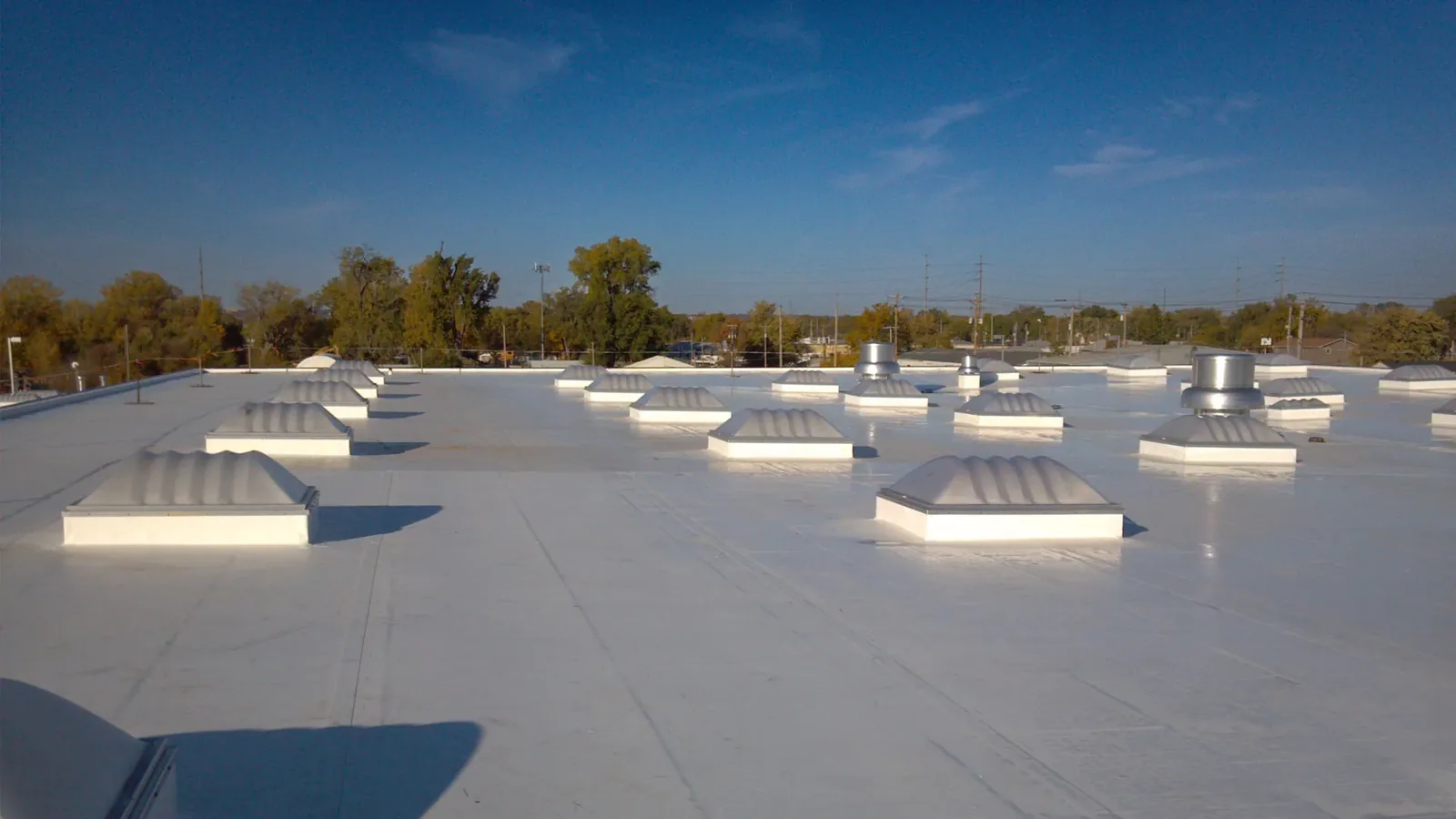
A built-up or modified bitumen roof needs a different repair detail from a single-ply membrane. SOPREMA offers SBS-modified bitumen products for commercial roofing, with system layers and surface details that depend on the selected assembly. We inspect the roof, identify the existing plies and flashing, and note where later repairs changed the surface. The owner then has a clear basis for comparing a repair, recover, or replacement. In Elizabeth, loading and occupied areas can influence where the work begins and how materials reach the roof.
Read the Plies Before Setting Scope
On a multi-ply asphaltic roof, we look for splits, open laps, blisters, exposed reinforcement, and surface wear. The number and condition of layers affect how a repair should tie in. We inspect the base and cap sheets, flashing, and transitions at curbs or walls, then record any area that needs an opening to verify what lies below. A surfacing repair alone may not address movement between plies or moisture in the insulation.
SOPREMA's SBS-modified bitumen line should be matched to its specified layers and application details. We compare product records with the existing assembly instead of treating all asphaltic roofs as interchangeable. A modified bitumen roof assembly and a built-up roofing system may share some field observations, but their materials and tie-ins still require system-specific review. We also record the existing substrate and edge metal before drawing the work boundary.
We also check whether the roof has been patched with materials from different work periods. A repair can cover an older blister or split without showing the layers beneath it. Marking those areas gives the owner a clearer repair limit and helps prevent new material from tying into a weak edge.
Inspect the Flashing at Every Change
Water can move at a parapet, curb, drain, expansion joint, or vertical transition even when the roof field appears intact. We inspect base flashing height, laps, corners, terminations, and the surface condition around each detail. A compatible repair must reach sound material, with the assembly protected against water during the work. The proposal should state which flashing sections will be replaced and which adjoining components remain.
At penetrations, we note movement, equipment vibration, and earlier trade work. Rooftop units may require a temporary path for service access while a repair cures or cools. We plan the work zone and protect the opening below before removing materials. Owners can compare a flashing failure repair with a broader commercial roof repair after the adjacent membrane and substrate are checked.
Plan Access Through Elizabeth Work Areas
At a commercial property, we coordinate the access point, loading route, and occupied-building needs with the site contact before work begins. For commercial roofing, each district presents a different property approach, loading route, and occupied-building context. We confirm the access point with the site contact and identify where equipment, membrane, and tear-off materials can move without obstructing daily use. That information shapes the work sequence before the roof is opened.
Properties in North Elizabeth and Elizabethport each need a building-specific roof and access review. A place name does not establish the loading pattern or condition at a particular property. The site contact identifies the entrance, staging space, and work zone before mobilization. We coordinate delivery timing, interior protection, and work limits after reviewing those site details. A roof inspection can document visible conditions before material is removed, while an access plan keeps the approved route clear for staff and other trades.
Delivery routes and restrictions vary by property. We review the approved entrance, staging area, and work hours with the site contact before setting a start time.
Keep Drainage and Surfacing in View
We check the slope to each drain or scupper and note any ponding, blocked strainer, loose clamping ring, or worn surfacing around the outlet. Asphaltic surfacing can conceal a low spot or earlier patch, so photographs should show the overall flow as well as the close detail. A drainage correction may involve deck, insulation, plumbing, or site work beyond the roofing scope. A drain and scupper review can define the roof items before other trades are assigned.
We photograph the roof surface and identify where water leaves the building. If wet insulation or a failed drain assembly is suspected, we state what additional inspection would resolve the question rather than covering the area with a new layer. Roof discharge and site drainage connections are recorded separately so the owner can assign any downstream work to the appropriate trade.
Choose Between Local Repair and New Layers
A repair can remain local when the defect is isolated and the surrounding plies, flashing, and substrate hold together. Repeated splits, widespread blistering, wet insulation, or failing edges can change the comparison. We explain the observations behind each option and identify concealed conditions that could affect quantity or timing. Tear-off depth, insulation, equipment moves, disposal, and protection of occupied space are practical cost drivers. A recover is considered only when the existing roof can support the new system and moisture is not being trapped.
Replacement scope should identify the assembly layers, flashing, drains, perimeter metal, and how the work will be staged. Coating is not a substitute for failed plies or a compromised deck, and surface suitability must be established before it enters the comparison. A recover review documents the retained roof condition, while replacement planning sets out removal and new construction details. The owner can compare those paths against the building's operations and long-term maintenance needs.
Preserve the Roof Assembly Record
Closeout notes should identify materials installed where known, repaired zones, photographs, and any remaining conditions. We add the details at drains, parapets, curbs, and transitions to the property roof file. Later HVAC, electrical, or solar work can change those details, so a dated record helps the next inspector distinguish project work from a later penetration. A condition report can keep the observations tied to specific roof areas.
For a separate single-ply comparison, owners may review Carlisle SynTec systems or Johns Manville products. Those manufacturers have their own compatible components and details. We select repair materials according to the roof actually installed. When water entry threatens an occupied room, round-the-clock emergency service can protect the opening; a permanent solution follows after the affected assembly and repair boundary are established.
Commercial Roofing Questions
What should be checked on an SBS modified bitumen roof?
We inspect the plies, laps, surfacing, flashing, drains, and earlier repairs. If moisture or the underlying layers cannot be confirmed from the surface, we identify a limited opening before setting a broader scope.
Can a surface coating repair split roof plies?
A coating is not a substitute for failed plies or a damaged substrate. We evaluate the roof material, surface preparation, flashing, and drainage before deciding whether a compatible restoration system belongs in the options.
How do roof access conditions affect work in Elizabethport?
We confirm the delivery route, staging area, loading activity, and interior protection with the property contact. Those conditions determine where materials can move and how the work zone is sequenced.
Does low-lying river geography prove a building has flood damage?
No. A building’s flood history cannot be inferred from low-lying geography alone. We inspect roof drains, overflow paths, visible water marks, and the discharge connection. Site drainage concerns outside the roof are handled separately from membrane work.
When does replacement make more sense than a local repair?
Widespread deterioration, wet insulation, repeated failures, or unstable substrate can support comparing replacement. We document those findings and note any concealed condition that could change the decision.
Schedule a SOPREMA Roof Review
Share the roof plans, material records, leak areas, and building schedule. We will inspect the assembly and map the repair or replacement options.