
Commercial Roof Flashing Repair in Elizabeth, NJ
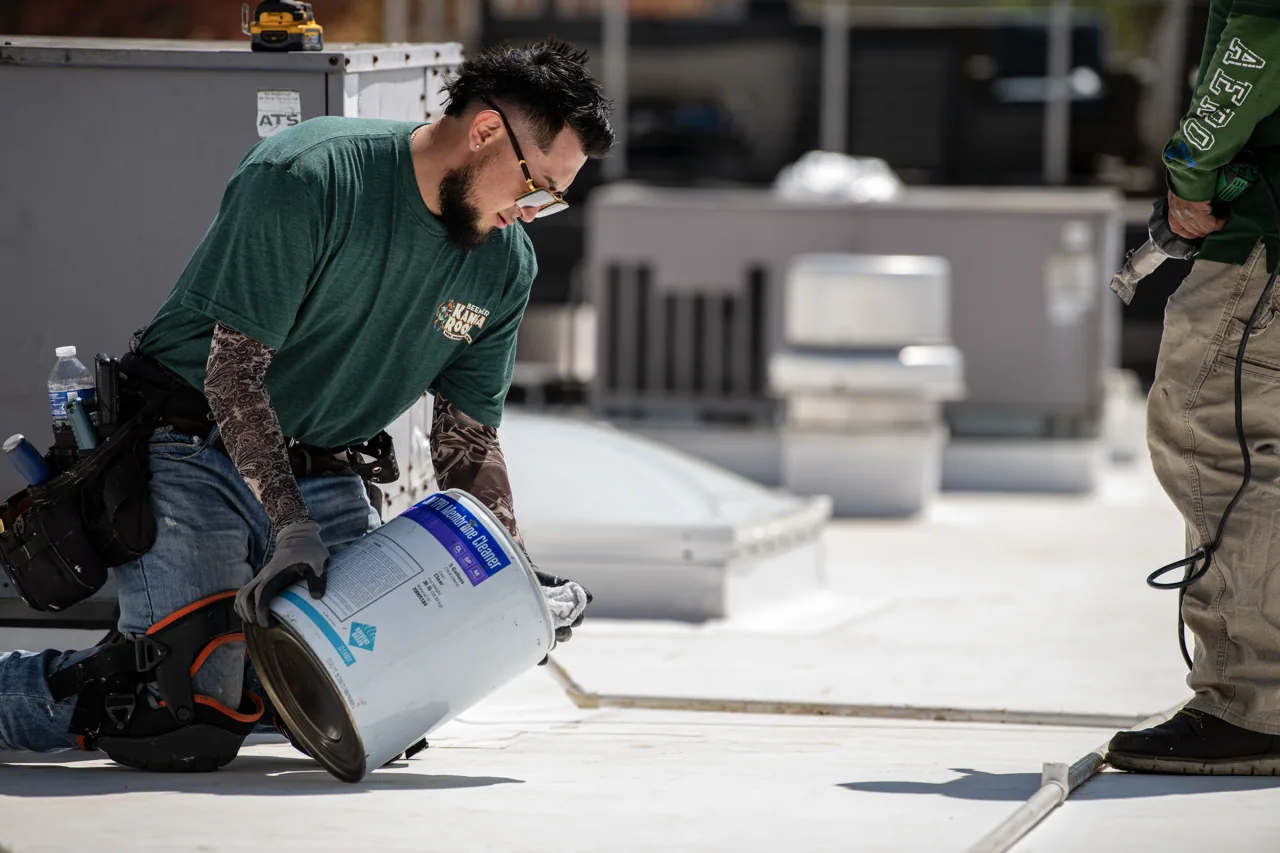
A curb can look sealed from the roof field while its back corner has opened where the wall turns down. Failed flashing is a local detail problem with a water path that can reach a room well beyond the roof opening. We inspect the termination, counterflashing, membrane tie-in, and material beneath the visible edge before choosing a repair. Elizabeth's commercial mix includes warehouses, logistics, retail, small manufacturing, and healthcare, so a roof transition may sit above loading, production, or occupied space. A review records the affected detail and the condition of nearby materials, then sets a repair boundary that can be protected before the crew leaves. If the opening has already let water inside, we connect the interior report to the roof rather than patch only the ceiling stain.
Find the Break in the Transition
Flashing joins roof membrane or metal to a wall, curb, pipe, parapet, or equipment base. A failure may show as a lifted edge, split sealant, loose termination bar, rusted counterflashing, open corner, or membrane pulling away from a vertical surface. We check where the detail begins and ends, whether the substrate is firm, and if water can move behind the visible face. A commercial roof inspection can map multiple transitions when a leak report spans more than one area. For a metal edge, the coping and edge-metal scope may need to address attachment and the adjoining roof membrane together. We photograph the whole detail and close views of fasteners, seams, and corners, so the owner can distinguish a single repair from deterioration that continues along the wall.
Trace Water Behind the Visible Face
Water may pass behind flashing and travel through insulation or deck before it appears inside. We compare the leak location with roof conditions above, then inspect the transition, nearby seams, penetrations, and drain path. If an adjacent wall or equipment trade controls part of the assembly, we identify the interface before opening material. The repair scope should say whether counterflashing, a termination, or a short run of membrane is included. When an opening reveals wet insulation or a damaged deck, photos and a written change scope give the owner a decision point before removal grows. A wind-damage review can be useful when metal or a cap has shifted after a storm; a puncture repair can address a separate hole in the field. These conditions need separate work limits even when they share one interior stain.
Set Access for Elizabeth Properties
Midtown Elizabeth and Elizabethport have older infrastructure needs, but those district conditions do not establish the wall, deck, or roof configuration at a specific property. We inspect the actual transition and confirm how the crew can reach it. Along the North Avenue corridor, port truck traffic shares the area with retail, hotels, warehouses, and other commercial uses; loading space and delivery timing must be confirmed with the property contact. In an occupied building, the work plan identifies the interior zone below the flashing, any service route that needs to remain open, and the point where the area will be dry at day's end. A roof review in Elizabethport can describe the broader service area, while staging and access are still decided at the building. No district name substitutes for a roof walk or an agreed work boundary.
Rebuild the Detail on Sound Material
Repair starts by removing loose sealant, failed flashing, or damaged membrane far enough to reach material that can support a new tie-in. We check the exposed substrate and replace wet or unsound components only within the approved scope. A metal counterflashing may be refastened or replaced, while a membrane transition may require a compatible strip, termination, and welded or adhered lap. Sealant has a role at designed joints, but it is not a substitute for attachment or a properly turned detail. We protect the opening between steps and keep the work area manageable above an occupied room. If an equipment curb needs a larger correction, the owner can review a curb and support scope before the final tie-in is closed. The proposal states material, area, access, and any adjacent trade work that could change the sequence.
Compare a Local Repair with Wider Work
A short flashing repair is suitable when the wall, curb, and surrounding roof field remain sound and the new material can meet a stable termination. If the same transition is loose along a long parapet, or water appears at several corners, the owner may compare a broader edge correction or roof replacement. We identify how far deterioration extends and what would require an opening to confirm. The roof system changes the repair method: a TPO membrane detail and a modified-bitumen transition do not receive the same material or seam treatment. We do not stretch the work line beyond observed conditions without approval. Timing and cost depend on access height, surface preparation, removal depth, material compatibility, weather window, and protection needed below. A clear scope lets facilities staff compare immediate repair with planned maintenance before another trade covers the transition.
Leave a Readable Repair Record
Closeout photographs should show the transition before and after work, the tie-in to the roof field, and the termination against the wall or curb. We identify any portion that could not be reached and any related work deferred to another trade. That record helps the next facilities review connect a later interior mark with the actual roof detail instead of repeating the same broad inspection. Elizabeth's low-lying Elizabeth River areas face flood and storm-surge risks, but that regional condition is not evidence that a particular building's flashing leaked. The roof record describes the detail inspected, observed water entry, and correction completed. A condition report by roof zone can keep those findings with repair history, while a warehouse roof record may also identify loading or equipment constraints that affected access. The closeout should make the boundary plain: what was repaired, what remains, and what should be reviewed next.
Commercial Roofing Questions
Which flashing details commonly open first?
Corners, terminations, counterflashing joints, and equipment-curb transitions deserve close inspection because they bring materials together. We look for separation, loose fasteners, split sealant, and movement at the substrate. The repair is based on the assembly and the extent of sound material around the opening.
Can new sealant close a leaking wall transition?
Sealant may protect a designed joint, but it will not secure loose metal or replace a failed membrane turn-up. We identify the movement and attachment problem first. If the substrate is sound and joint geometry is correct, the scope can include compatible sealant as one part of the repair.
How far should a flashing repair extend?
The repair continues until the crew reaches a stable termination and material that accepts the new tie-in. If deterioration continues behind the visible opening, we document it and request approval before expanding the scope. Photos show the original boundary and the additional condition that changed it.
What happens if another trade owns the curb or wall work?
We mark where the roofing transition meets that work and identify who will reset or repair the adjacent component. The sequence needs the curb or wall finished before the roofing tie-in is closed. A handoff record can show the exposed area, required completion, and the roof step that follows.
What should we provide before a flashing inspection?
Share the leak location, prior repairs, roof plans if available, and restrictions on roof access. Tell us whether equipment, wall panels, or interior systems are being changed nearby. Those details help us inspect the likely transition and plan protection for the space below.
Arrange a Commercial Flashing Review
Share the interior leak area, roof records, access limits, and any nearby equipment or wall work. We will inspect the transition and define a repair boundary.