
Commercial Rooftop Equipment Curbs and Supports in Elizabeth, NJ
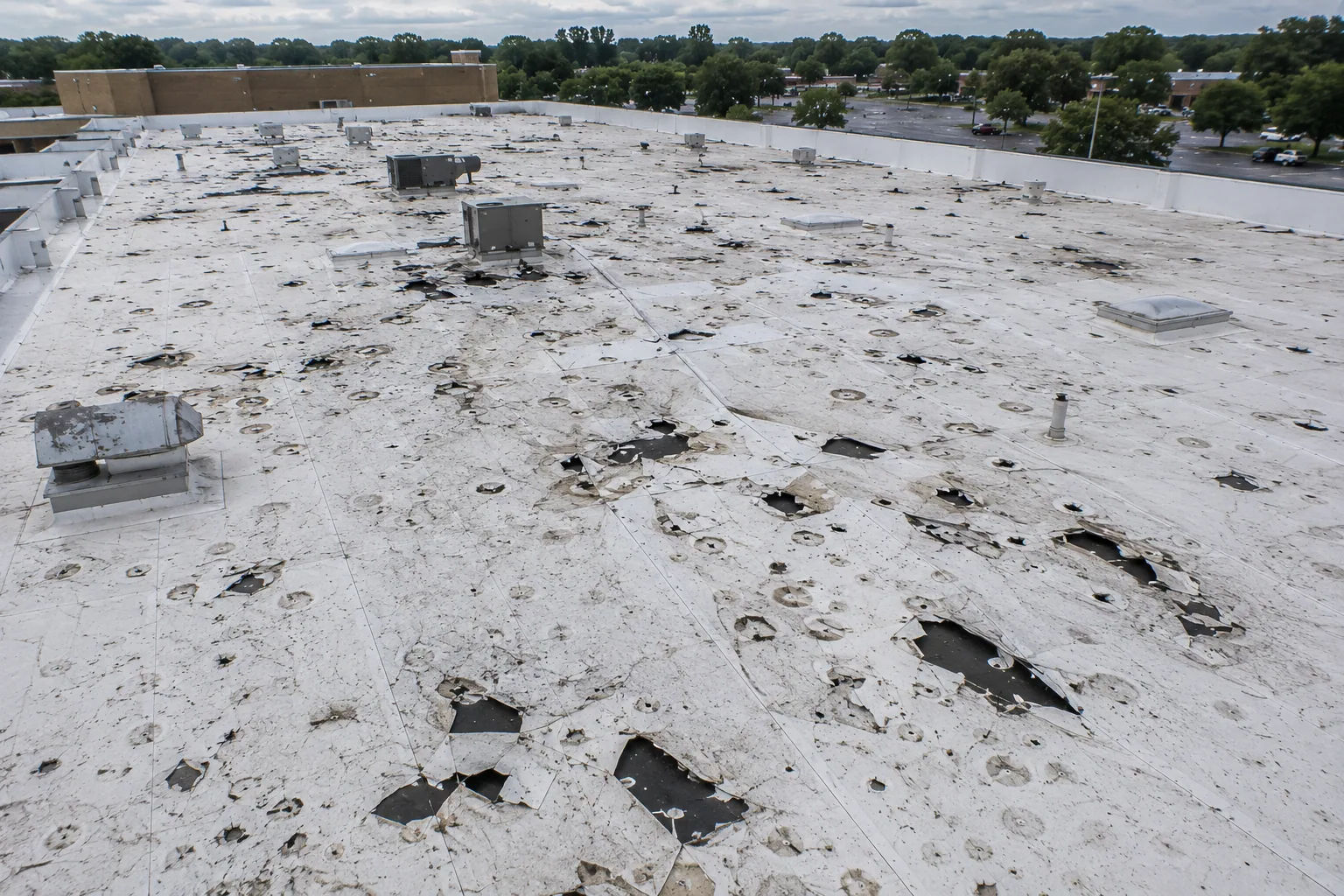
A rooftop unit curb is both a structural interface and a flashing detail. At a warehouse near the North Avenue corridor, vibration, service traffic, and water paths can all meet at the same base. We inspect the curb, membrane tie-in, fasteners, support framing, and nearby drains before recommending repair or replacement. The equipment can remain serviceable only when the roof detail stays sound and the access route is clear.
Elizabeth’s commercial mix includes logistics, retail, healthcare, and local service buildings. Equipment layouts vary across those properties, so a useful roof plan shows each curb and support rather than treating all rooftop units as one condition. We coordinate roofing work around the equipment and its service needs.
Map the Equipment and Roof Interfaces
We start by identifying rooftop units, pipe stands, conduit supports, rails, exhaust curbs, and abandoned bases. The review checks whether each item sits on a stable support, whether the membrane rises and terminates correctly, and whether water can drain around it. We look for loose fasteners, cracked welds, compressed pads, open flashing, rust staining, and roof cuts made during earlier service. A unit that operates normally may still have a roof interface that needs attention.
Service access matters as much as the curb itself. We note the route technicians use, clearance at drains and walkways, and locations where tools or replacement parts may cross the roof. Supports should keep lines and conduit clear of the membrane without concentrating load on an unsuitable surface. If a support bears on a soft or wet area, the assembly needs review before new flashing hides it.
At a property in Midtown Elizabeth, an equipment change can affect an occupied room below and the schedule for roof access. We ask which units must remain in operation, who controls shutdown, and whether another trade will disconnect or lift equipment. Roofing and mechanical scopes need a clear handoff so the curb is not left open between crews.
Restore the Curb and Flashing
When the curb remains sound, a repair may include removing failed flashing, preparing the substrate, and tying compatible membrane or metal into the existing roof. Corners and vertical faces need reinforcement that follows the system requirements. At a metal curb, we check seams, counterflashing, and fastener placement. At a membrane curb, we look for secure attachment and a termination above the finished roof level. The repair boundary reaches clean, stable material rather than stopping at a visible bead of sealant.
If the curb is loose, rusted through, too low, or incompatible with planned insulation, replacement or modification may be needed. Equipment removal, temporary weather protection, and mechanical reconnection should be assigned to the appropriate trades. The proposal should state which items are included and what requires owner coordination. We do not move or disconnect operating equipment without authorization and a defined sequence.
Nearby pipe penetrations may need a separate penetration flashing review. If water has entered the roof assembly, a leak repair should trace the path and check adjacent seams. When the roof has broader wear, the curb work can be coordinated with a replacement scope or a compatible TPO assembly. Each option depends on the roof system and field condition.
Keep Pipes and Equipment Above the Membrane
Pipe supports and equipment stands should spread load, resist movement, and avoid abrading the roof. We inspect the bearing surface, support spacing, restraint, and contact pad. A line resting directly on a membrane can wear through as it moves. A support that bridges a drain path may create a dam. The proposed correction identifies the support type and location so service personnel know where a pipe or conduit can be safely carried.
Support changes should account for the equipment’s load and expected movement. A roofer can describe the roof interface and installation limits, but structural capacity and mechanical anchorage may require review by the engineer or trade responsible for the equipment. If a curb or support is being relocated, the old attachment holes and membrane opening need permanent closure. Leaving an unused curb on the roof can create a future leak point and obstruct maintenance.
Low-lying areas near Elizabeth River face flooding and storm-surge concerns. We keep that local drainage context in view, then inspect a building's outlet elevations and overflow path before deciding whether supports need to move. We check that equipment supports do not block drains, scuppers, or the route from a cricket to an outlet.
Coordinate Work With Building Operations
Before work, we confirm roof access, lift or crane areas, work hours, interior protection, and equipment shutdown responsibilities. Deliveries may need to avoid active loading lanes, tenant entries, or service calls. A property contact can identify which unit serves a critical room and who can authorize interruption. The crew protects adjacent equipment and keeps materials from entering open intakes or drains.
We plan the curb repair in stages: establish protection, remove only the failed detail, inspect the exposed substrate, install the approved tie-in, and verify the finished transition. If concealed damage extends beyond the agreed area, we photograph it and discuss the change before expanding the opening. The equipment operator and roofing lead should agree when a unit can be set back into service. This prevents a finished roof detail from being disturbed by an uncoordinated restart.
For equipment work in Elizabethport, access and staging may depend on active commercial operations. We confirm site-specific rules rather than assuming the same plan works at every building. A roof inspection can document adjacent membrane and drainage conditions before a mechanical project starts. If the owner needs ongoing review, a maintenance visit can record curb movement, flashing wear, and service-related changes.
Check the Finished Roof Connection
At closeout, we inspect the curb corners, flashing laps, membrane attachment, support pads, and nearby drains. We confirm that unused penetrations are closed, service paths remain clear, and temporary protection has been removed. Photographs show the finished interface and any item that remains outside the roofing scope. The property file should identify the equipment location and material used so future technicians can avoid damaging the tie-in.
If a new unit is scheduled, confirm the curb dimensions, equipment load, opening size, and flashing height before fabrication. A mismatch can force field changes and leave the roof exposed longer than necessary. Share mechanical drawings and the proposed lift sequence early. Commercial Roofers Elizabeth can review the roof interface and coordinate roofing details with the project team while leaving equipment engineering and controls with the responsible professionals.
Request a curb or support review when a unit is replaced, pipe stands shift, flashing opens, or service work leaves an exposed attachment. A clear inspection can separate roofing repairs from mechanical or structural work and keep the approved boundary practical.
Commercial Roofing Questions
Can a roofer repair flashing without removing the rooftop unit?
Often, yes, when the curb is sound and the failed area is accessible. The inspection checks curb attachment, height, and the membrane tie-in. If the curb is damaged or the equipment blocks the detail, lifting or removal may require coordination with the mechanical contractor.
Who is responsible for disconnecting equipment?
The equipment owner or mechanical contractor typically controls shutdown and reconnection. The roofing scope should identify when access is needed and which surfaces will be disturbed. We coordinate the roof sequence but do not disconnect operating equipment without authorization.
Why should pipes be raised on roof supports?
Supports keep lines off the membrane, reduce abrasion, and can preserve drainage paths. The support must suit the load and line movement. Loose pads or a poorly placed stand may create damage, so the location and bearing surface should be checked.
Can an abandoned curb remain after equipment is removed?
It should be reviewed and closed with a permanent detail. An unused curb can collect water or leave an opening through the roof assembly. The scope should state whether removal, structural closure, insulation, and membrane restoration are included.
Does new equipment require a different flashing detail?
Possibly. Curb size, roof build-up, membrane type, and equipment position affect the connection. Confirm the finished roof height and opening before the unit is set. The roofer and mechanical team should coordinate details before the lift.
Review a Rooftop Equipment Detail
Share equipment drawings, roof type, access limits, and any leak or service history. We will inspect the curb and flashing interfaces and define the roofing work.