KEE Roofing for Commercial Properties in Elizabeth, NJ
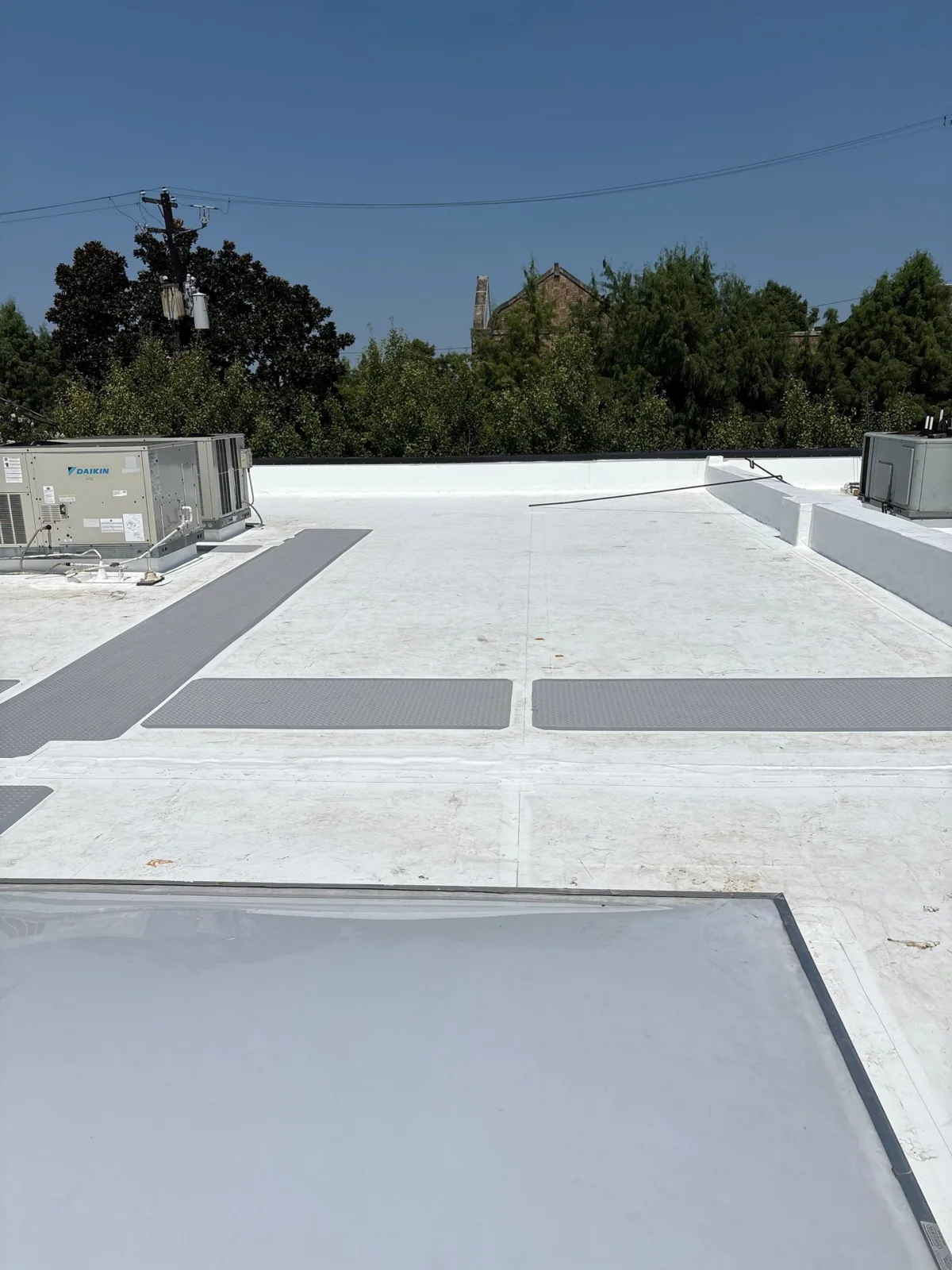
KEE roofing is a PVC-alloy membrane option used on commercial roofs. At a property in Elizabethport, the membrane, substrate, attachment, seams, and transitions still need building-specific review. We inspect the visible assembly and review available product information before recommending a KEE system. The material choice is only one decision; attachment, substrate, seam work, and transitions must also fit the property.
Commercial buildings in Elizabeth range from logistics and retail spaces to healthcare and local service uses. We ask how the roof is used, where service traffic moves, and which areas need to stay accessible. Those observations shape a practical scope without assuming every KEE product or installation is the same.
Check the Existing Roof Before Selecting KEE
We inspect the membrane, seams, flashing, edge metal, drains, and previous repairs. If the existing roof has wet insulation, loose attachment, or a deteriorated deck, a new membrane cannot correct those conditions by itself. Selective openings or testing may be appropriate when the roof layers are unknown. We explain the reason for that investigation before work begins and document how each opening will be restored.
Exposure also matters. The owner can identify exhaust, process activity, rooftop cleaning, and chemicals that may contact the roof. We review observed surface changes and consult the selected system’s requirements before setting the scope. If conditions point to a compatibility issue, we recommend testing or manufacturer guidance rather than making a broad promise based on the product name.
At a property near the North Avenue corridor, loading and equipment service can constrain access. We map staging, drain locations, walk paths, and roof areas other trades use. A KEE assembly should be maintainable after installation, with access to outlets and equipment details left clear.
Compare KEE With Other Membranes
KEE and standard PVC share a thermoplastic family but may differ in formulation and product requirements. TPO is another thermoplastic membrane, while EPDM uses a different material and seam approach. We compare the specified products, roof use, prior repairs, and compatible accessory materials. The owner should review the complete system rather than a single data point.
Repairability is part of the selection. The property file should show which membrane was installed and what patch or flashing materials are compatible. Where the roof already has KEE or PVC, a repair must match the field material and detail requirements. Where the roof is a different system, the transition needs a designed tie-in instead of a simple surface overlap.
If a roof is stable but aging, a recover can be considered only after attachment, moisture, and project criteria are reviewed. Broad failure may support replacement instead. We define the removal and restoration limits so the proposal explains how the old layers relate to the new assembly.
Detail Seams, Curbs, and Drain Connections
Thermoplastic membrane seams are generally heat welded. A clean lap, controlled settings, and consistent movement help create a continuous weld. Intersections and patches need special attention because the weld path turns or narrows. We inspect the seam as work proceeds and correct areas that do not meet the selected system’s requirements before they are concealed.
Curbs, pipes, skylights, drains, parapets, and expansion joints interrupt the roof field. Each transition should be flashed with compatible components and terminate securely. We check corners, vertical membrane, clamping rings, metal edges, and the nearby field. A penetration flashing review can be coordinated with the membrane installation.
At a roof edge, membrane and coping need a clear termination. If the finished assembly raises the roof surface, edge metal height and flashing laps may need revision. We record those interfaces before material is ordered. The scope also states which items require another trade, such as equipment removal or wall repair.
Install the System in Controlled Sections
Installation starts with a prepared substrate and dry roof area. We remove loose material, complete approved repairs, and install insulation and cover board according to the assembly. The crew stages rolls without blocking outlets and limits the open area to what can be secured. Weather conditions can affect welding and adhesives, so the sequence may pause when the surface or air conditions no longer fit the system requirements.
Occupied properties need coordination below the roof. We plan noise, deliveries, roof access, and interior protection with the property contact. In Midtown Elizabeth, a work zone may need to avoid tenant entrances or delivery periods. The crew maintains a safe boundary around overhead work and communicates when access or timing changes.
If removal uncovers wet insulation or damaged deck, we photograph the condition and wait for owner direction before expanding the scope. Concealed work is restored with the approved material and recorded before the next layer is placed. An inspection can document the baseline while a separate cover board scope defines the substrate layer supporting the membrane.
Document the Finished KEE Assembly
At closeout, we review seams, corners, flashings, edges, and drains. Photographs should show details before they become difficult to reach. The property file can include membrane identification, insulation information, attachment details, and maintenance instructions. Keep those records available before another contractor cuts a penetration or sets equipment on the roof.
At the building, we check roof outlets and overflow paths directly, then identify any slope or site-discharge question that needs separate attention.
Request a KEE roof review when a property has recurring seams, chemical exposure concerns, or a planned replacement. Share roof drawings, known material, leak history, and access limits. Commercial Roofers Elizabeth can assess accessible conditions and explain whether a compatible repair, recover, or replacement scope fits the assembly found.
The project record should identify how the installed membrane meets other roof materials. A future repair may involve an adjacent system, a new curb, or a change in equipment location. Clear photographs of these interfaces help the property team understand where new work begins and where existing roofing remains. Keep product records, repair notes, and compatible-material information accessible to building staff and service contractors.
After a service visit, note any new openings, equipment changes, or material handling near the roof. A short dated record gives the property manager a way to compare later observations with the installed assembly and route a compatible repair to the right detail.
Commercial Roofing Questions
What does KEE mean in roofing?
KEE refers to a PVC-alloy membrane product family. Exact formulations and system details vary by manufacturer. Review the product information and compatible accessories for the specified assembly rather than assuming all KEE roofs use the same components.
Is KEE the same as PVC?
They are related but not necessarily identical products. KEE is a PVC-alloy option with its own formulation and requirements. The roof system, seams, attachment, and repair materials should follow the selected product documentation.
Can KEE be installed over an existing roof?
A recover depends on moisture, attachment, substrate, code and project requirements, and compatibility. The existing layers should be inspected before another assembly is added. A test opening may be needed when roof records are incomplete.
How are KEE seams installed?
Thermoplastic sheet seams are typically heat welded using system-specific procedures. Surface preparation, settings, and field checks matter, particularly at corners and intersections. The crew should verify welds and repair deficiencies before closeout.
Does a KEE membrane resolve chemical exposure?
Not without identifying the material and how it reaches the roof. The owner should share process or exhaust information, and the roofer should check compatibility with the specified system. Testing or manufacturer review may be needed before a product is selected.
Compare KEE Roof Options
Share roof history, known membrane type, exposure concerns, and access limits. We will inspect the assembly and explain compatible repair or replacement work.