
Commercial Skylight and Penetration Flashing in Elizabeth, NJ
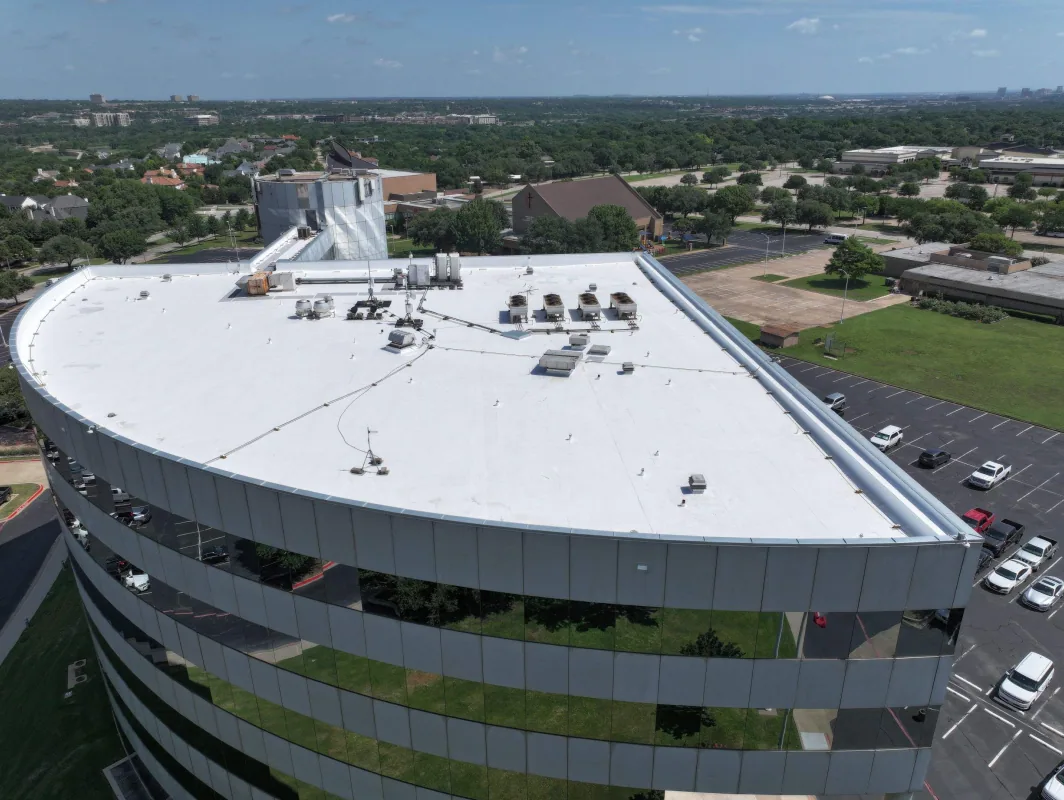
A skylight curb can stay dry for years, then leak at a corner after a repair or change in roof movement. On a warehouse near the North Avenue corridor, we inspect the curb, counterflashing, membrane laps, and nearby drainage before choosing a repair. The same review applies to vent stacks, conduit, equipment supports, and other roof penetrations. A bead of sealant over an unknown opening is not a durable flashing plan.
Elizabeth’s commercial properties include active warehouses, retail uses, and occupied buildings. Work around a skylight must protect the opening, the people below, and any equipment near the roof. We locate the leak path, define the repair boundary, and coordinate access before disturbing the detail.
Find the Opening Before Replacing Flashing
We look for cracked or loose curb corners, separated membrane, open counterflashing, failed sealant, and movement around fasteners. Water can travel along a curb and appear inside away from its entry point, so the roof surface and the interior symptom need to be compared. We check the surrounding field for ponding or a low seam that could send water toward the skylight. If the assembly is wet below the surface, additional testing or a controlled opening may be necessary.
Skylight glazing, frames, and roof flashing are different components. We identify whether the problem is at the glazing seal, curb, membrane transition, or a nearby penetration before recommending roofing work. A cracked lens or failed window assembly may need a glazing specialist. The proposal should make that boundary clear instead of treating every leak around a skylight as a roof membrane defect.
On an occupied property in Midtown Elizabeth, we confirm which rooms are below the work area and whether equipment or stored goods need protection. A skylight can be fragile, and temporary covers must be secured against movement without creating a new drainage obstruction. We note safe access, fall protection needs, and any opening that must remain protected when the crew leaves the roof.
Tie New Flashing Into Sound Material
Once the failed detail is identified, we remove material only as far as needed to reach a clean and stable tie-in. The repair may require new membrane up the curb, reinforced corners, compatible sealant at a termination, or replacement of deteriorated metal. We check curb height, attachment, and condition before closing the assembly. If the curb itself is loose or damaged, new membrane alone will not correct the movement.
For pipes and conduits, the selected boot or field-fabricated flashing must fit the shape and material of the penetration. Several lines close together may require a different approach from a single round stack. The scope identifies which items are included and how the membrane connects around them. We do not leave cut edges exposed or rely on a sealant bead to bridge a gap that needs a formed detail.
Different roof systems call for different materials and welding or adhesion methods. If the existing roof is TPO or EPDM, the flashing must be compatible with that assembly. A broad repair scope may include nearby seams, while an isolated leak repair should stop at the documented boundary. We explain when concealed insulation or deck conditions may change the work.
Plan Work Around Light and Occupancy
Before opening a curb detail, we arrange interior protection and decide whether the skylight must be covered or the room below cleared. Work should not leave an opening unprotected at the end of a shift. We stage materials and tools so they do not block drains, fire access, or equipment service paths. The property contact receives a schedule that identifies noisy work, roof access, and any temporary change to rooms below.
Skylight and curb work can require lift access, roof entry, and a protected path below. We set delivery timing and the route from staging to the roof with the property contact, then adjust the work sequence to protect daily operations.
When roof access is limited, an inspection can help prioritize which openings need immediate attention. If moisture is suspected in the assembly, an infrared moisture survey can identify areas for follow-up verification. We use those results as part of a larger roof assessment, not as a substitute for checking the curb or penetration itself.
Check the Finished Detail
After the flashing is installed, we inspect the curb corners, laps, terminations, fasteners, and connection to the field membrane. We confirm that the skylight remains secure and that drains are open. Photographs show the detail after repair and any adjacent condition that needs later attention. If the work required a temporary cover, we remove it only when the permanent assembly is ready and the area below can be safely returned to service.
At Elizabethport, as elsewhere in Elizabeth, a roof should remain accessible for future service. Keep a record of the repair date, materials, and skylight location so a later contractor knows where the membrane was disturbed. A maintenance review can check the flashing after rooftop work, seasonal movement, or a severe weather event.
If water continues after the detail is repaired, the next review should test adjacent transitions and trace the interior path again. A roof can have more than one leak source, and one corrected penetration does not establish that nearby areas are sound. We document the new observation and discuss a separate scope before expanding work.
Request a Curb or Penetration Review
Share the roof type, skylight or penetration location, interior symptoms, and access limits before the visit. If a tenant or equipment operator needs notice, identify the contact and operating window. Commercial Roofers Elizabeth can inspect accessible flashing and explain whether the repair involves membrane, metal, glazing, or another trade. Recommendations will follow the detail and conditions found at the property.
Prompt attention to an open curb corner or loose boot can prevent water from reaching insulation and interior finishes. The repair still needs a sound substrate, compatible materials, and a clear termination. A useful closeout record gives the property team a basis for future inspections and helps keep later roof work from disturbing a finished tie-in.
Commercial Roofing Questions
Does a skylight leak always mean the glazing needs replacement?
No. Water may enter at the glazing, curb, membrane tie-in, nearby seam, or an adjacent penetration. The inspection should identify which component has failed. Roof flashing work can correct a curb transition, while a glazing defect may need a specialist.
Can flashing be installed without replacing the skylight?
Yes, when the skylight and curb remain secure and the roofing failure is at the membrane or metal transition. We check curb condition, height, corners, and attachment before recommending the repair. A damaged frame or lens changes the scope.
How are multiple pipes near one curb handled?
The roofer maps each penetration and checks spacing, movement, and material compatibility. Closely grouped lines may need a formed detail rather than separate boots. The proposal should state which lines are included and how the flashing ties into the existing roof.
Will the room below need to close during the repair?
That depends on the opening, interior use, and protection plan. We coordinate with the property contact before disturbing a curb or skylight, and secure the roof at the end of each shift. Some rooms may need temporary protection or restricted access.
What should be checked after flashing work?
Review laps, corners, terminations, curb attachment, and the nearby roof field. Confirm that temporary covers are removed, drains remain open, and interior areas are dry. Keep photographs and repair details with the building’s roof record.
Schedule a Skylight Flashing Review
Tell us which curb or penetration is leaking, the room below it, and the roof access limits. We will inspect the transition and define the repair boundary.